
Nikro Air Duct Cleaning in Aurora: A Homeowner’s Guide
When a duct cleaning company pulls up with a portable unit that looks suspiciously like a shop vac with a hose upgrade, that’s not an accident of scheduling. That’s the tool that fits a low-cost special. Nikro equipment is one of the clearest signals that a company came to do the actual job. This guide explains what Nikro systems do mechanically, why negative pressure containment matters in your Aurora home, and how to ask any contractor the right questions before they step through your door.
What Does Nikro Equipment Actually Do That a Shop Vac Can’t?
Nikro builds industrial vacuum and agitation systems for duct cleaning, restoration, and abatement work, not consumer cleaning. The mechanical difference comes down to three things: sustained airflow volume, sealed negative pressure, and agitation tools that loosen debris before extraction. A portable shop vac creates a small pressure differential and a tiny airflow path. Nikro systems are designed to move enough air to carry heavy particulate through the duct run without it settling back into the system.
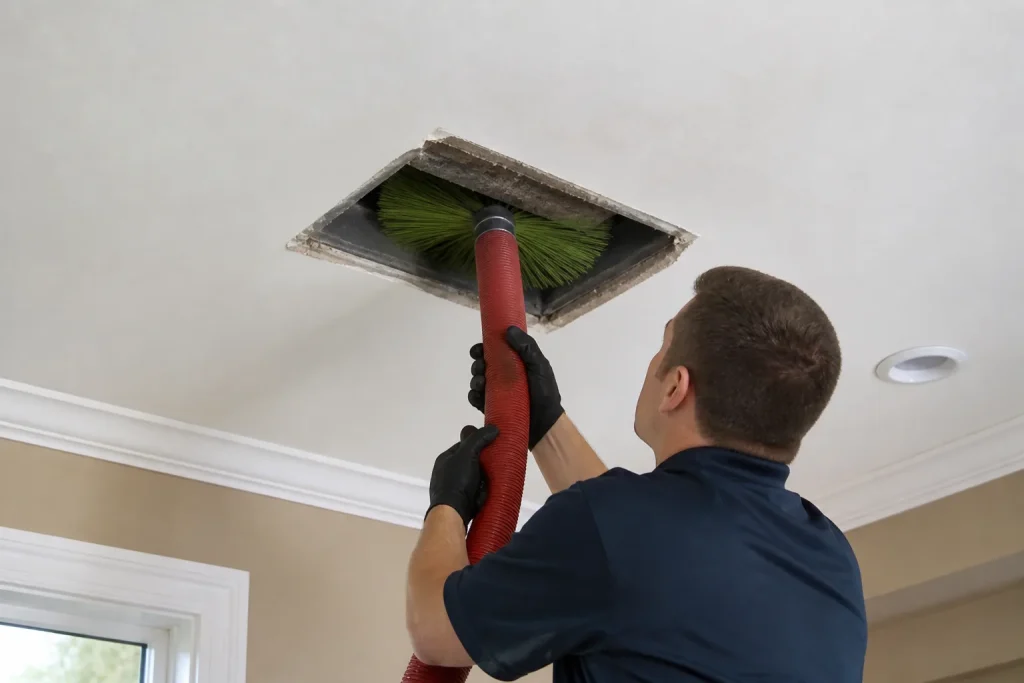
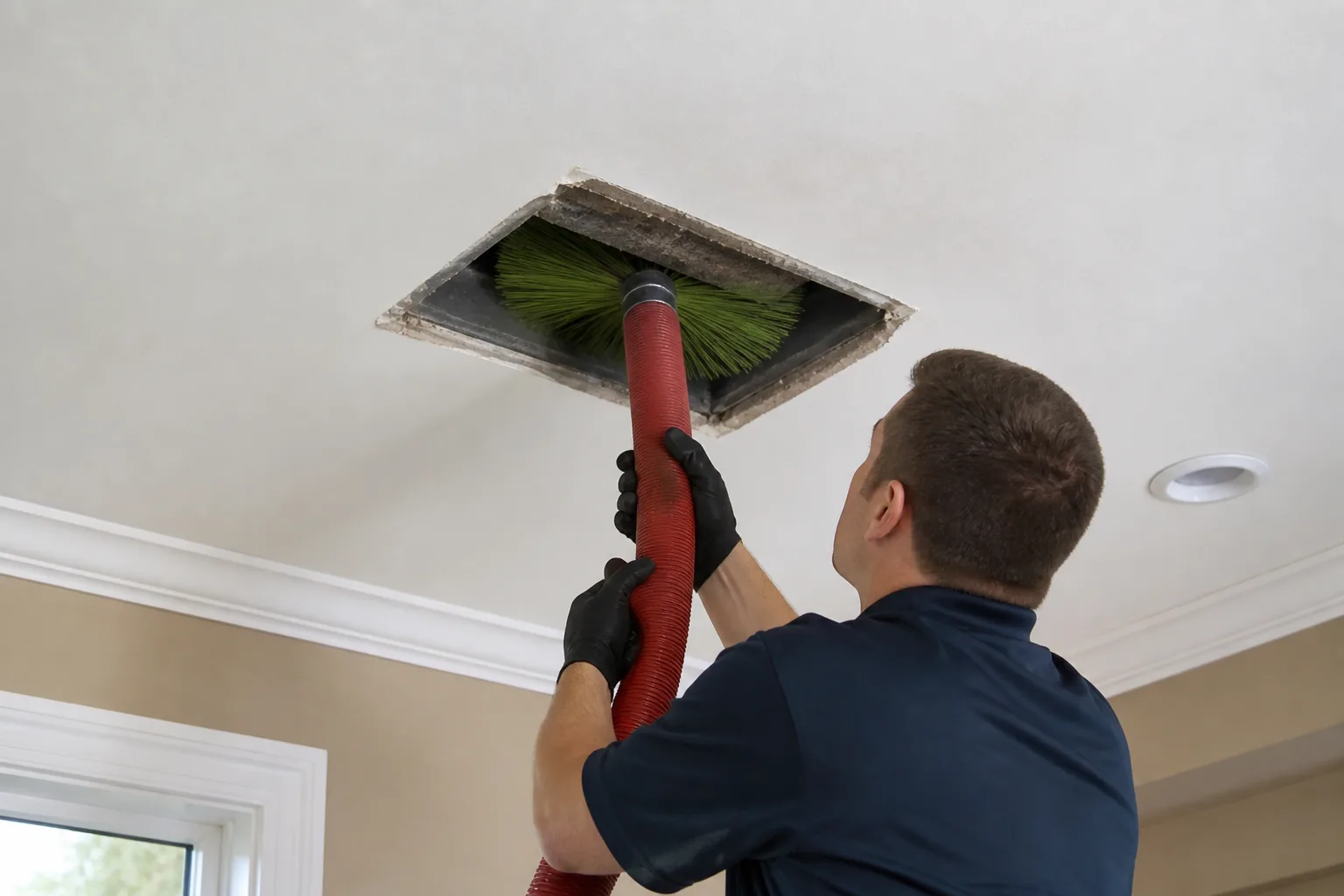
Agitation is the half most people never see. Nikro offers air-driven and mechanical whip tools that spin inside the duct to break loose the bonded layer of dust and debris clinging to the walls. A vacuum alone pulls loose dust; agitation then extraction is what actually cleans the surface. In Aurora homes, where forced-air heat runs for months out of the year, that bonded layer builds up steadily. A shop vac removes what’s sitting on top. Nikro equipment addresses the layer that’s adhered to the metal or flex duct.
We use Nikro tools as standard equipment on every air duct cleaning job, not as an upgrade tier. When you’re comparing quotes in Aurora, ask whether the company uses a truck-mounted or portable vacuum with agitation tools or just a vacuum hose. The answer tells you a lot about what you’re paying for.
Why Does Negative Pressure Containment Matter in Your Aurora Home?
Negative pressure containment means the vacuum system pulls air from the ductwork into the collection unit and keeps it there, so dislodged debris doesn’t escape into your living space. This is the part of the job you can verify with your own eyes, and it’s the part that separates a clean process from a dusty one.
Here’s what to look for when a technician sets up:
- A sealed connection at the main trunk. The vacuum hose should be attached at a single access point, and the system should be pulling from the whole duct run, not just one vent at a time.
- Containment at the vents. During agitation, open supply vents are usually covered or sealed to prevent blowback into rooms.
- Visible filtration. Professional setups include HEPA or multi-stage filtration. Abatement Technologies air filtration capability goes further, since it’s built for high-particulate and post-renovation environments.
- No dust clouds. If you see dust puffing out of a vent during the job, the pressure isn’t right.
In a typical Aurora forced-air home, the duct system runs hundreds of feet through unconditioned space, and the return side often carries more particulate than the supply side. Negative pressure keeps that material contained through the whole run. Ask the technician where the vacuum connects and whether the vents are sealed during agitation. A professional-grade setup in Aurora handles this as standard procedure.
What Types of Contamination Is Nikro Equipment Built to Extract?
Nikro systems are designed for the contamination you can’t see from the register: settled dust, construction debris, drywall dust from renovation, pet dander, and the fine particulate that accumulates on duct walls over time. These are the materials that standard portable vacuums displace rather than remove. A shop vac creates enough turbulence to lift loose debris into the air and not enough draw to carry it out. Nikro equipment maintains the airflow needed to extract it.
What Nikro handles well:
- Settled dust and dander on duct walls and at joints
- Drywall and construction dust after a remodel
- Debris from aging flex duct that has started to degrade
What it doesn’t do, and what no equipment can do: biological remediation. If there’s active mold growth inside the ducts, duct cleaning removes the food source and the spores it can reach, but it doesn’t kill an active colony or reseal a compromised system. That’s a separate remediation scope. We clean and repair ducts; we don’t perform remediation. In Aurora, post-renovation debris is a common reason to call, and so is the steady accumulation that comes with a forced-air system running through cold winters. Nikro equipment is designed for exactly those conditions.
How Do You Ask a Duct Cleaning Company About Their Equipment?
You don’t need a technical vocabulary to get a useful answer. The questions below are plain enough to ask any contractor, and the responses tell you whether they’re equipped for the job. Ask before you book, not after the technician arrives.
Five questions to ask
- “What kind of vacuum do you use?” A professional answer mentions a truck-mounted unit or a portable HEPA system with sufficient airflow, not a shop vac. If the answer is vague, ask again.
- “Do you use agitation tools inside the ducts?” The right answer is yes, with air-driven whips, brushes, or rotary tools. A vacuum-only answer means they’re pulling loose debris and leaving the bonded layer.
- “How do you contain the debris?” Look for negative pressure, sealed connections, and filtration. If they can’t describe it, they probably aren’t doing it.
- “What’s included in the price?” A flat, whole-system price is normal for real work. Per-vent pricing on a low-cost special is often the entry point for add-on fees once the technician is inside your home.
- “Can I see before-and-after photos of my own ducts?” A company confident in its process will take them. If they won’t, that’s your answer.
If you’re in Aurora and want an honest answer on any of these, call (888) 364-6081. We answer 24/7. Fast dispatch from 7am to 7pm, Sunday through Friday.
What Is Nikro Equipment Used For in Aurora Duct Cleaning?
Nikro tools are the base of our air duct cleaning process in Aurora, not an add-on. We run agitation inside the ducts to break up the bonded layer, then extract it under negative pressure with the Nikro system. When the job turns up damaged or disconnected duct sections, we repair them in the same visit rather than sending you to a second contractor. The same equipment also handles the other jobs that matter:
- Dryer vent cleaning. Lint accumulation is a documented fire risk, and the same agitation-and-extraction logic applies. We treat it as safety work, not a comfort upgrade.
- Post-renovation cleaning. Construction debris in the ducts after a remodel is one of the most common reasons homeowners call. Abatement Technologies filtration capability handles the higher particulate load.
- IAQ system-aware cleaning. Familiarity with Honeywell and Aprilaire systems means we understand how whole-home air quality equipment connects to the ducts, not just the ducts on their own.
For a full scope look at the service, see air duct cleaning. If lint is the concern in your Aurora home, our dryer vent cleaning page covers the process. You can learn more about our full service lineup at Aurora Duct Cleaning.
When Should You Call a Professional Instead of Doing It Yourself?
The short answer: if the job requires pulling debris from inside the system, it’s a professional job. Consumer vacuums and vent brushes reach the surface and displace debris into your rooms rather than extracting it. If you’re seeing dust blowback from vents when the system runs, a visible buildup around return registers, or debris falling from a register, those are signs the duct system itself needs a proper cleaning.
Call a professional when:
- Dust disperses into the room whenever the heat or AC kicks on
- You’ve recently finished a renovation and dust has worked its way into the ducts
- The system has visible debris at the registers
- Your dryer is taking noticeably longer to dry loads (a dryer vent signal, not a duct cleaning one)
Our technicians have up to experience in residential systems. We use professional-grade equipment, we agree to one flat price per system before work begins, and we show before-and-after photos of the customer’s own ducts at the end. For more about the local market or general service details, see Aurora. Our Guardsman-associated standards mean we protect surfaces and floors during in-home work.
The Bottom Line
Nikro equipment isn’t a brand most homeowners know, but it’s the difference between a system that extracts and one that displaces. Three things to take from this guide:
- Ask what vacuum and agitation tools the company uses. A shop vac is a red flag.
- Ask how they contain debris. Negative pressure and sealed connections are non-negotiable.
- Ask for before-and-after photos of your own ducts. If they won’t, don’t book.
If you’re in Aurora and need help, Aurora Duct Cleaning offers free estimates. Call (888) 364-6081. We answer 24/7, and fast dispatch runs from 7am to 7pm, Sunday through Friday. We’re closed Saturday. Our technicians use Rotobrush and Nikro equipment as standard kit, not as an upgrade, and we’ll answer any equipment question before you book.
Frequently Asked Questions
It serves a different role. Truck-mounted units provide high static pressure and long hose runs; Nikro portable systems provide industrial airflow and agitation tools that work close to the debris. Many professional setups use both: agitation inside the duct and extraction. The key question is whether agitation tools are part of the process, not just which vacuum is used.
A low quote is usually built around less equipment and less time. A single portable vacuum with no agitation tools, per-vent pricing, or a flat fee that becomes an upsell once the technician arrives. The job is either whole-system cleaning with real extraction or it’s a surface pass. Ask what’s included and what equipment is used, and the price difference usually explains itself. Call (888) 364-6081 for a free estimate on a whole-system price.
Ask for before-and-after photos of your own ductwork. A technician using professional-grade equipment will have access points they’ve opened and can document what came out. If you’d rather inspect yourself, ask them to show you a register before and after the job. A whole-system cleaning leaves a visible difference. Call (888) 364-6081 if you want to talk through the process first.
It depends on the home. Forced-air systems with pets, recent renovations, or long heating seasons like we run in Aurora need it more often than a clean, low-particulate home. There’s no universal interval; a professional inspection tells you more than a schedule does. If your vents show visible buildup or you’ve just finished a renovation, that’s the signal. For an honest assessment of what your system needs, call (888) 364-6081.
Written by the team at Aurora Duct Cleaning.
Need Air Duct Cleaning Help?
Call Aurora Duct Cleaning - licensed & insured, with free written estimates in Aurora.
(888) 364-6081