
Last updated November 15, 2026
 Whole-home duct cleaning
 Dryer vent cleaning
 Camera inspection
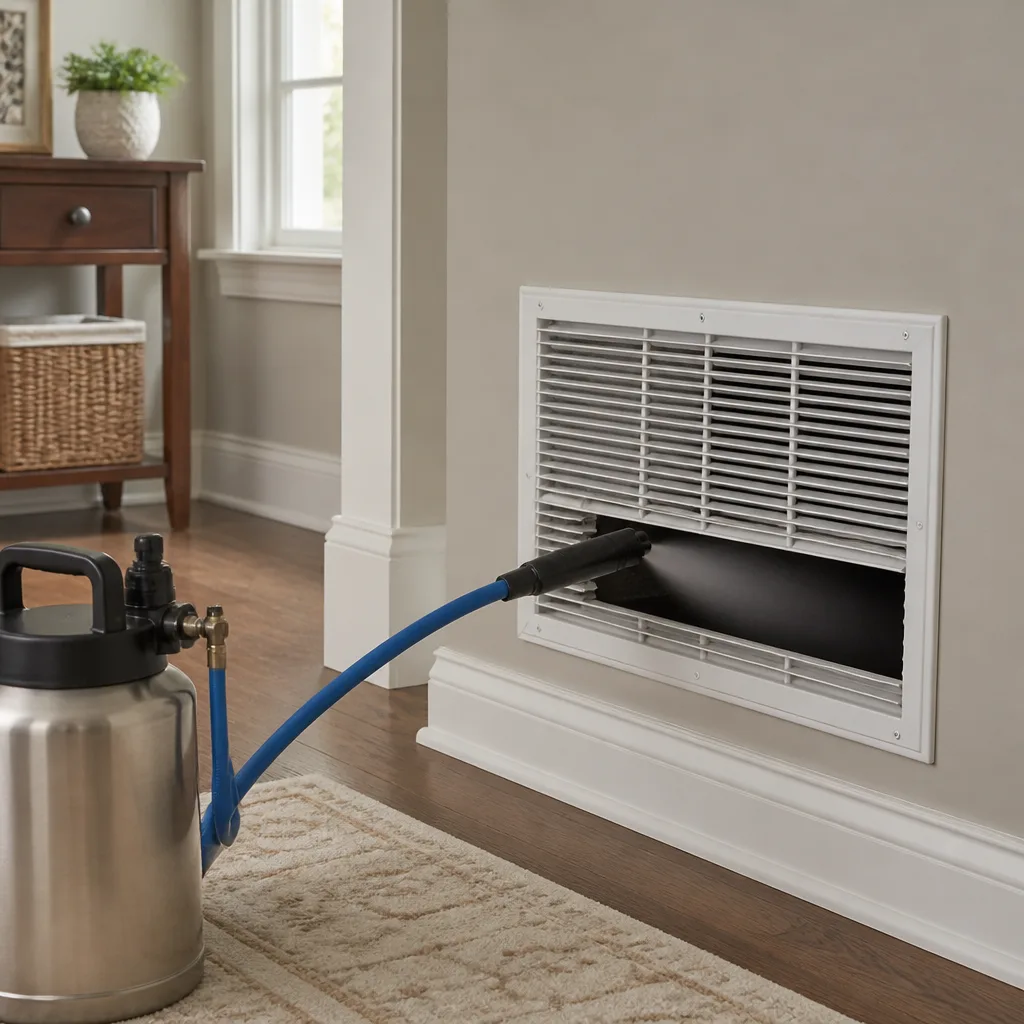 Sanitizing & deodorizing
Whole-system duct and dryer vent check with before-and-after photos - you see exactly what came out of your vents
That "$99 whole-house special" is a bait ad - the real number appears once they are in your hallway, or the "clean" is a shop-vac at the register. We photograph the inside of your ducts before and after instead.
Choosing the Right Air Duct Cleaning Brand: A Buyer’s Guide for Aurora
There’s no independent brand ranking for duct cleaners. No consumer magazine rates them. No certification body publishes a “best of” list. So homeowners in Aurora end up comparing logos, vans, and coupon mailers, and treating recognition as proof. It isn’t. What separates a company that actually services your duct system from one that wipes your vent covers and leaves is method and equipment. This guide walks through the criteria that matter: what negative pressure source removal looks like, how to read reviews for real signal, what NADCA membership verifies, and why knowing Aurora’s housing stock matters more than a familiar name on a truck.
Quick Answer
Choose a duct cleaning brand in Aurora by evaluating equipment and scope, not name recognition. Ask three questions: Does the company use negative pressure source removal with a contact cleaning method for duct interiors? Does it inspect before and after the work? Does it repair duct damage it finds, or does it hand you off to a second contractor? A company that answers yes to all three is doing real duct system work. A company that avoids those questions is cleaning vent cosmetics.
Styles & brands we work with
- Whole-home duct cleaning
- Dryer vent cleaning
- Camera inspection
- Sanitizing & deodorizing
Table of Contents
- Why Equipment Criteria Outrank Brand Reputation in Aurora
- The Three Technical Questions That Separate Real Work From Vent Cosmetics
- How to Read Duct Cleaning Reviews for Aurora Homes
- What NADCA Membership Actually Verifies and How to Check It
- Why Local Specialization in Aurora Matters More Than a National Name
- Pre- and Post-Inspection: What a Real Duct Cleaning Visit Should Include
- Post-Service Indicators: Confirming the Contractor Delivered
- How Pricing Should Work and What to Watch For
Why Equipment Criteria Outrank Brand Reputation in Aurora
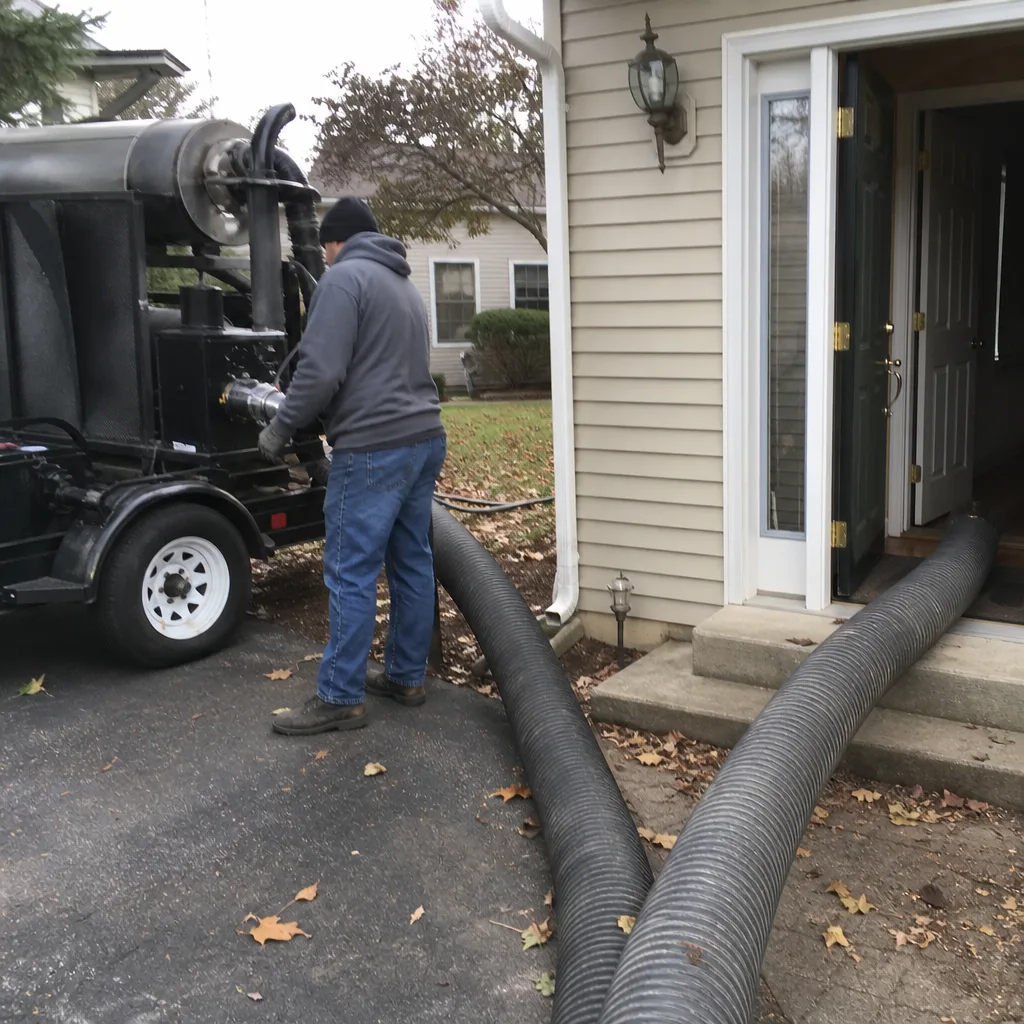
A familiar logo on a van tells you nothing about what’s in the truck. What matters is whether that equipment is built for duct interiors or repurposed from something else. Professional duct cleaning uses two main categories: a high-powered vacuum system that pulls debris out under negative pressure, and a rotary contact tool that physically dislodges debris from duct walls before extraction. Both pieces are purpose-built. Neither is a shop vac.
When we evaluate equipment for any job, we look at three things:
- Is there a true negative pressure source? A proper vacuum system draws air from the duct system to a HEPA-filtered collection unit. Without negative pressure, dislodged debris resettles inside the ducts or escapes into the living space.
- Is the contact tool actually aggressive enough? Rotary brush systems reach duct walls and dislodge adhered debris. Air-only tools stir dust but don’t scrub it off the metal or flex liner.
- Is the filtration rated for contaminated environments? Post-renovation debris, mold-adjacent conditions, or heavy particulate loads demand equipment built for high-contamination jobs.
At Aurora Duct Cleaning, we use Rotobrush and Nikro systems, both purpose-built duct cleaning platforms, and we keep Abatement Technologies filtration capability on hand for post-construction or heavily contaminated duct environments. That equipment matters in Aurora specifically, where older housing stock means ducts often carry decades of accumulated debris, and where renovation-heavy neighborhoods mean we regularly encounter drywall dust drawn into the air handler. Built for the job, not borrowed from a hardware store. That’s the standard we hold to.
The Three Technical Questions That Separate Real Work From Vent Cosmetics
You don’t need to become a duct cleaning technician to vet a contractor. You need three questions, and you need to listen for the specifics in the answer. If you only remember one section of this guide, make it this one.
- Do you use negative pressure source removal? The answer should be a straight yes, with the equipment named. A company that says “we use a strong vacuum” without describing a system built for ducts is describing a shop vac.
- What’s your contact cleaning method for the duct interiors? The answer should reference rotary brush tools, whip systems, or compressed air tools used inside the ductwork under negative pressure. The word “brush” is a good sign. “We blow out the vents” is not.
- Do you perform a pre-inspection and post-inspection? A real duct cleaning visit starts with an inspection to identify problem areas (deteriorated flex duct, disconnected joints, heavy debris accumulation) and ends with a post-inspection to confirm the work was done. If the company can’t describe both, they’re not running a professional process.
Ask those three questions when you call. The answers will be specific. They’ll name equipment and methods. If the person on the phone is vague or immediately pivots to a coupon, you’ve learned what you needed to know, and it’s worth spending that call next time with a company that will show you its process. We don’t just clean – we inspect and repair, and that’s the difference you’re listening for.
How to Read Duct Cleaning Reviews for Aurora Homes
Reviews are the most-used and least-useful buyer signal in this trade, because most reviewers have no idea what a thorough job looks like. A homeowner who watched a technician run a vacuum attachment over each vent cover for ninety seconds may leave five stars. A homeowner who paid for a real cleaning may leave four because the technician arrived late. Read reviews for language that indicates thoroughness, not for star averages.
Here’s what to look for in positive reviews:
- Specific descriptions of the process: phrases like “showed us before-and-after photos,” “ran a camera through the ducts,” “explained what they found,” or “sealed the registers before starting.” These signal a contractor who documented and explained the work.
- Mentions of the equipment used: “brought in a big machine,” “used a brush tool inside the ducts,” “had a large vacuum system outside.” Reviewers don’t need to know brand names. They just need to have seen the equipment.
- Mentions of repairs discovered: “found a disconnected section of duct,” “fixed a leak in the return,” “told me one of the flex runs was crushed and repaired it.” This is exactly the signal that a contractor is doing full-scope work rather than surface cleaning.
And here’s what to weight in negative reviews:
- Complaints about a thirty-minute visit: Real duct cleaning in a typical Aurora home takes substantially longer than a quick vent wipe. If multiple reviewers mention how fast the job went, that’s a serious signal.
- Complaints about price creep: “Quoted a low price on the phone, charged far more once they arrived.” This is the bait-and-switch pattern that defines this industry’s worst operators.
- Complaints about no documentation: “No photos, no report, they just left.”
- Complaints that debris appeared throughout the house: This happens when negative pressure isn’t used properly, or at all.
Ignore reviews that praise a company for being cheap. Price tells you almost nothing about the work. Focus on reviews that describe the process. Those are the ones that identify a contractor doing real duct system work in Aurora.
What NADCA Membership Actually Verifies and How to Check It
NADCA, the National Air Duct Cleaners Association, sets the standards most of the industry points to. Membership is one of the few third-party signals you can verify. But you need to know what it actually means and how to check whether an Aurora company is a current member.
Here’s what NADCA membership criteria typically require of a company:
- Adherence to the ACR standard: the assessment, cleaning, and restoration standard for HVAC systems, which defines what a professional cleaning job should involve.
- Insurance: general liability coverage, and in many cases pollution liability coverage specific to the work.
- Continuing education: at least one NADCA-certified individual on staff, with ongoing training requirements.
- Ethical standards: agreement to the association’s code of ethics, which prohibits bait-and-switch advertising and requires honest scoping of work.
To check membership in Aurora, do this:
- Visit the NADCA website directly, not the contractor’s site.
- Search by company name or by Aurora, IL, in the member directory lookup.
- Confirm the company name matches the one on the estimate, the van, and the invoice.
- Ask the company directly for its NADCA membership number or certification details if you can’t confirm it in the directory.
Membership isn’t a guarantee of a good job – plenty of non-NADCA contractors do excellent work, and membership doesn’t replace your three questions from the previous section. But if a company claims NADCA membership and isn’t in the directory, that’s a real problem, and it’s a signal worth walking away from. Ask for the membership number before you book. A company that’s legitimately a member will have it on hand.
Why Local Specialization in Aurora Matters More Than a National Name
A national franchise can have brand recognition and still be run by whoever bought the territory last year. What a company actually knows about the local housing stock is what determines whether they diagnose quickly and clean thoroughly. Aurora’s housing runs from 1960s ranch construction through 1990s two-story builds, and each era of construction has its own ductwork pattern.
Here’s what we mean, and why it matters in Aurora specifically:
- 1960s-1980s construction: ductwork in these homes is often rigid sheet metal in the basement and main trunk, with flex duct branches running through joist spaces. That combination means you need both contact cleaning for the sheet metal and careful handling for the flexible runs, which can degrade over decades.
- Basement air handlers: many Aurora homes have their air handler in the basement, with the trunk line running overhead. That layout makes pre-inspection straightforward, but it also means return air often travels short distances and you need to check the return plenum specifically, not just supply ducts.
- Flex duct configurations: flex duct became common in later construction, and it’s more prone to kinks, disconnections, and compression than rigid metal. A contractor familiar with flex duct patterns will spot a crushed run during inspection instead of blowing air through a blockage.
- Cold winters and heavy heating season: Aurora’s climate means the furnace runs most of the year, and duct systems see more air movement per year than they would in a milder climate. That’s a real reason duct cleaning merits attention here.
None of this is exotic. But it’s the kind of knowledge that separates a contractor who’s cleaned a thousand Aurora homes from a franchise operator running a national playbook. When you book, ask about the specific duct configuration in the home, and listen for the answer to reference basement layouts, flex versus rigid, and return trunks. A company that can’t describe those is a company following a script.
Pre- and Post-Inspection: What a Real Duct Cleaning Visit Should Include
Every professional duct cleaning visit has two inspection points: one before any cleaning starts, and one after the work is complete. If a company skips either, it’s guessing. Here’s what each should look like, in order:
- Arrival and walkthrough: the technician walks the home with you, notes the number of registers and returns, and asks about any recent renovations, HVAC changes, or comfort complaints. This is your chance to point out specific vents that have been noisy or dusty.
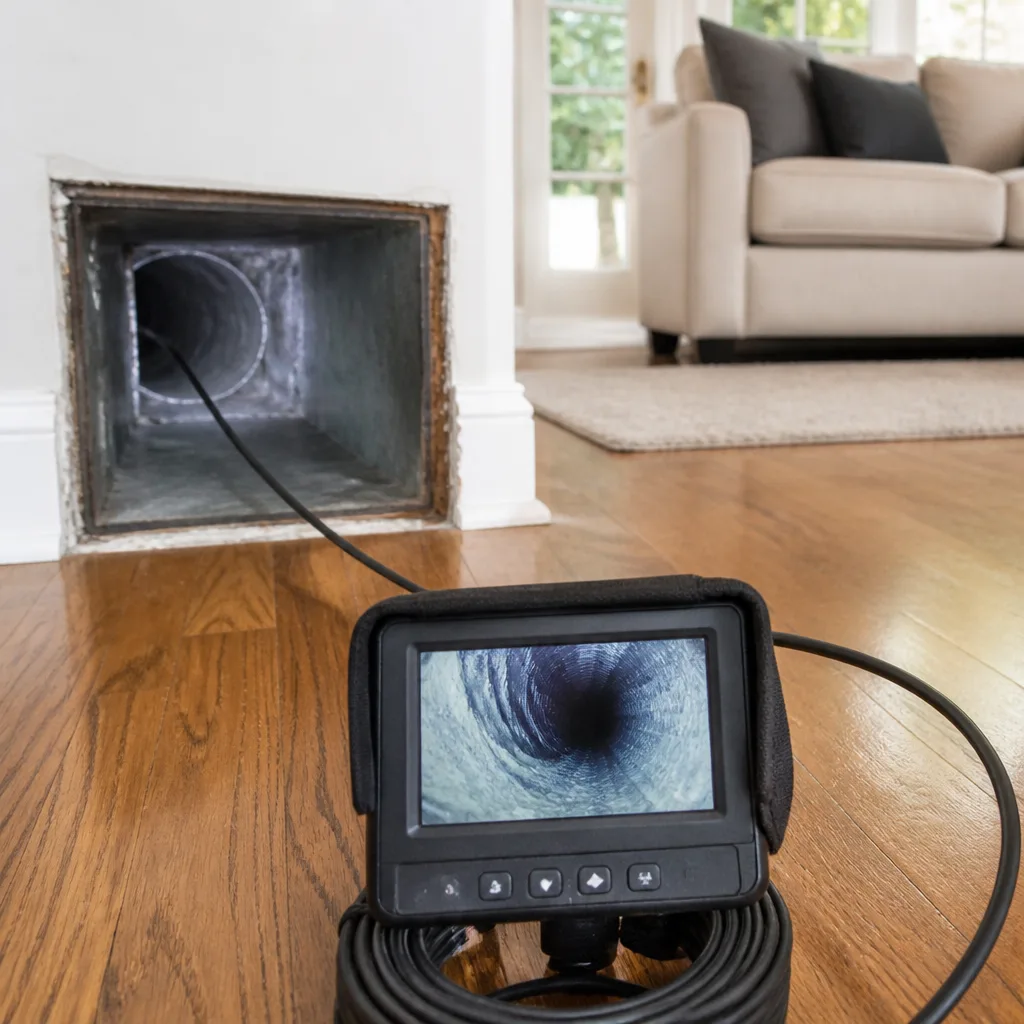
- Pre-inspection inside the ducts: a camera or visual inspection of accessible duct interiors looks for debris accumulation, moisture, disconnected joints, or crushed flex runs. This is where an air duct repair gets identified, and it’s why we offer repair alongside cleaning.
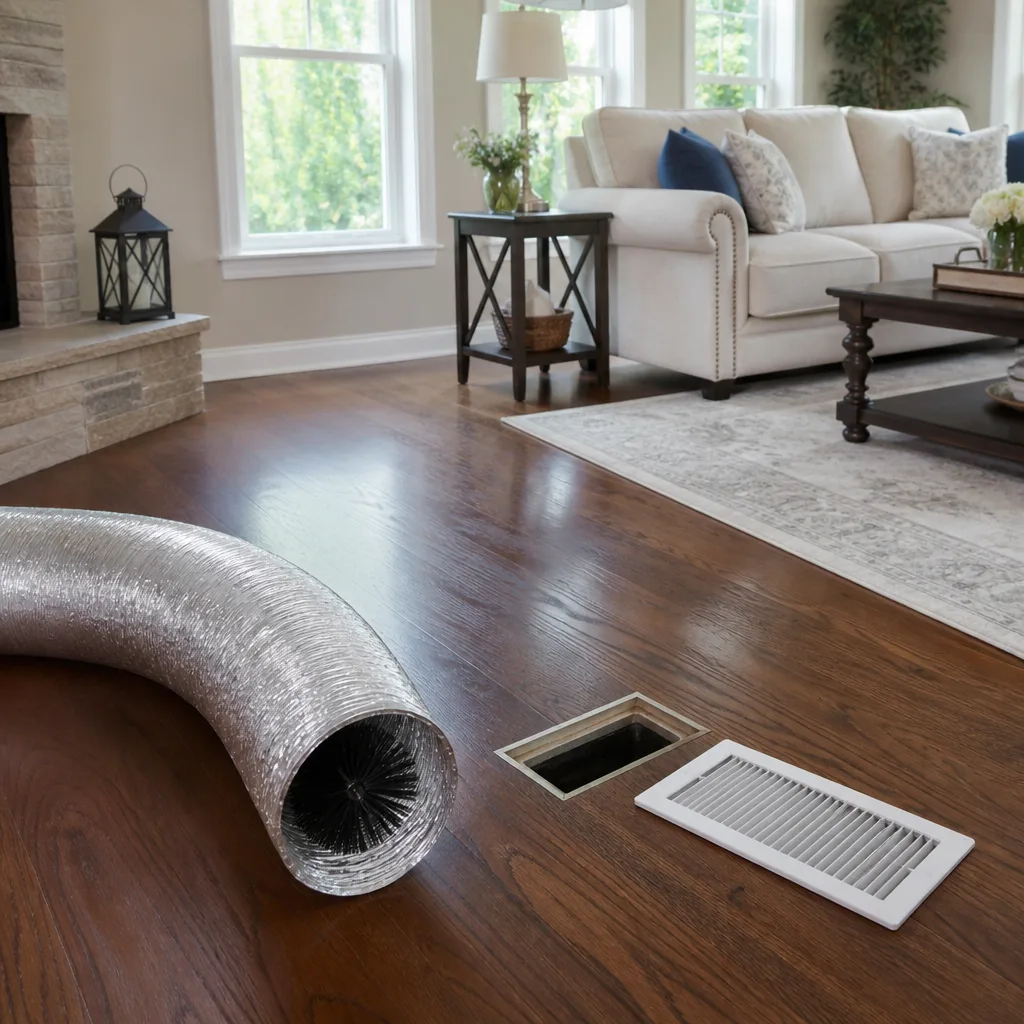
- Register and return removal: the covers come off. Floor protection goes down. The vacuum system gets connected to create negative pressure through the entire system.
- Contact cleaning: rotary brush or whip tools run through every branch and trunk, agitating debris from duct walls while the negative pressure system collects it.
- Air handler and coil area cleaning: the accessible portions of the air handler and blower get cleaned, and the A-coil area is checked for debris that’s passed through the filter.
- Post-inspection: the technician re-inspects visually or with a camera to confirm the ducts are clean, and documents findings before reassembling registers.
- Report and before-and-after photos: you receive a summary of what was found, what was cleaned, and what (if anything) needs repair. This is the documentation that confirms the job was actually done.
A visit that skips steps two or six is a visit that can’t tell you whether it accomplished anything. If the company you’re considering can’t describe both inspections, ask why not before you book. Cleaning without an inspection is guesswork.
Post-Service Indicators: Confirming the Contractor Delivered
Once the technician leaves, how do you know the work was actually done to a professional standard? Duct cleaning is invisible. You can’t see inside the ducts after the fact without a camera. But there are three indicators that confirm a thorough job:
- Measurable airflow improvement: does air from the registers feel stronger and more consistent than it did before? Combustion air, static pressure, or a simple airflow test at each register can show improvement if the ducts had real debris load. If a technician runs a flow test before and after, that’s documentation. If not, you can still judge by feel.
- Before-and-after camera documentation: a real contractor shows you photos or video of the inside of the ducts before and after the cleaning. If the company claims to have cleaned, but can’t produce documentation, ask for it. Legitimate contractors capture this as part of the job.
- A completed job report: the report should list the number of registers and returns serviced, the methods used, any repairs performed, and any findings that need follow-up. It should be specific to your home, not a generic form letter.
One more indicator that’s easy to miss: what does the air handler area look like after the visit? If there’s dust settling on the floor around the air handler, or debris accumulated in the register grilles, the negative pressure connection wasn’t done properly. A thorough cleaning leaves the accessible area cleaner than it started, not dustier.
If any of those indicators is missing, you have grounds to ask the contractor to return and re-inspect, or to document. Don’t assume the work was done because a truck showed up. The post-service indicators are what confirm it.
How Pricing Should Work and What to Watch For
Duct cleaning prices vary widely in Aurora, and the variation usually tells you less about the job and more about what each company is hiding. A fair price is set per job by a written estimate after a walkthrough or at least after understanding the system layout. A price quoted over the phone, before anyone sees the home, is almost always a teaser number.
Here’s what a good pricing conversation looks like:
- System-based pricing: the quote should reflect the number of registers, returns, duct runs, and the state of the system. Not a flat number per vent, and not a coupon price that gets revised after the technician arrives.
- One price agreed before work starts: the price should be in writing and should be what you pay. Additions should be discussed and approved before they happen, not invoiced after.
- Repairs priced separately and transparently: if the inspection reveals a damaged duct run, a disconnected joint, or a crushed flex section, the repair cost should be a separate line item agreed before the work happens.
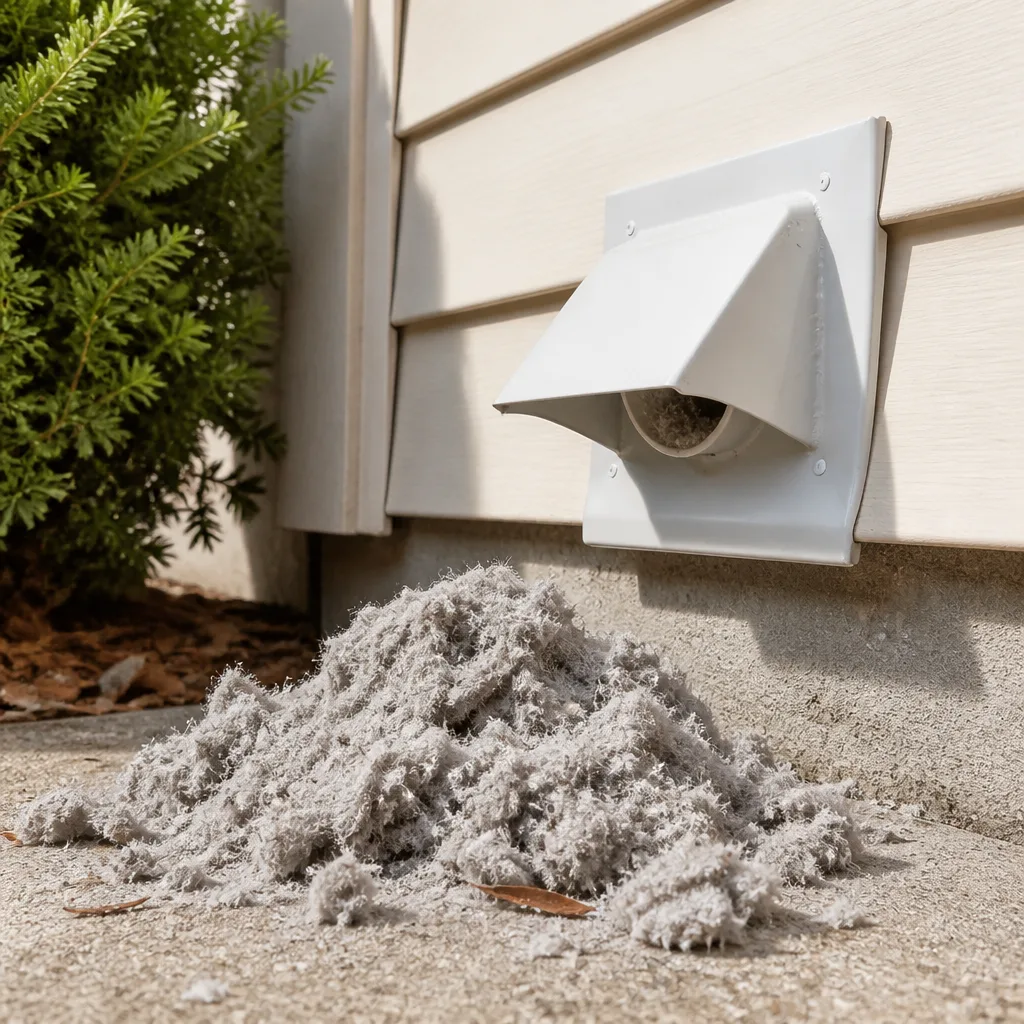
- Dryer vent cleaning as a distinct service: lint-clogged dryer vents are a documented fire risk, and a company that offers dryer vent cleaning as part of its menu is signaling that it takes the safety side of the work seriously, not just the airflow side.
Watch for these pricing red flags:
- A coupon price so low that no company could do the work well at that number.
- Per-vent pricing quoted before the technician has seen the system.
- Upsells triggered mid-job that weren’t part of the original scope.
- Any pressure to pay before you’ve seen before-and-after documentation.
Aurora Duct Cleaning prices each job by written estimate. The estimate is free. The number doesn’t change because a technician found something once he was inside your home. If you’re comparing quotes and one is dramatically lower than the others, ask what it excludes, because a contractor competing on price is going to compete on process too.
Common Mistakes to Avoid
- Booking on brand recognition alone. A familiar van doesn’t indicate equipment or process. Ask the three questions (source removal, contact method, pre- and post-inspection) before you confirm the appointment, and let the answers decide.
- Accepting a phone quote as final. Aurora duct cleaning jobs are priced per system, not per vent. If the phone price is the price, ask whether it includes the return ducts and air handler. If it doesn’t, you’re not comparing apples to apples.
- Not asking about repairs. If the contractor only cleans and doesn’t repair, you’ll end up hiring a second company when a crushed flex run or disconnected joint is found. Confirm that repair is part of the scope before booking.
- Ignoring the dryer vent. Dryer vents aren’t part of the HVAC duct system, but they’re the same kind of maintenance issue, and a lint-clogged vent is a documented fire risk. Homeowners who clean their ducts should clean their dryer vents at the same time.
- Not getting before-and-after documentation. The photos are your only way to verify the job was done. If documentation isn’t part of the package, ask for it, and consider whether a company that doesn’t produce it is worth booking.
- Overpaying for a name that doesn’t correspond to capability. A national franchise in Aurora can be run by a less-experienced operator than a local company. Evaluate the process, not the marketing budget.
- Skipping the pre-inspection walkthrough. The walkthrough is where the technician learns the system layout, and where you point out what’s been bothering you. Don’t rush it. A thorough walkthrough prevents surprises later.
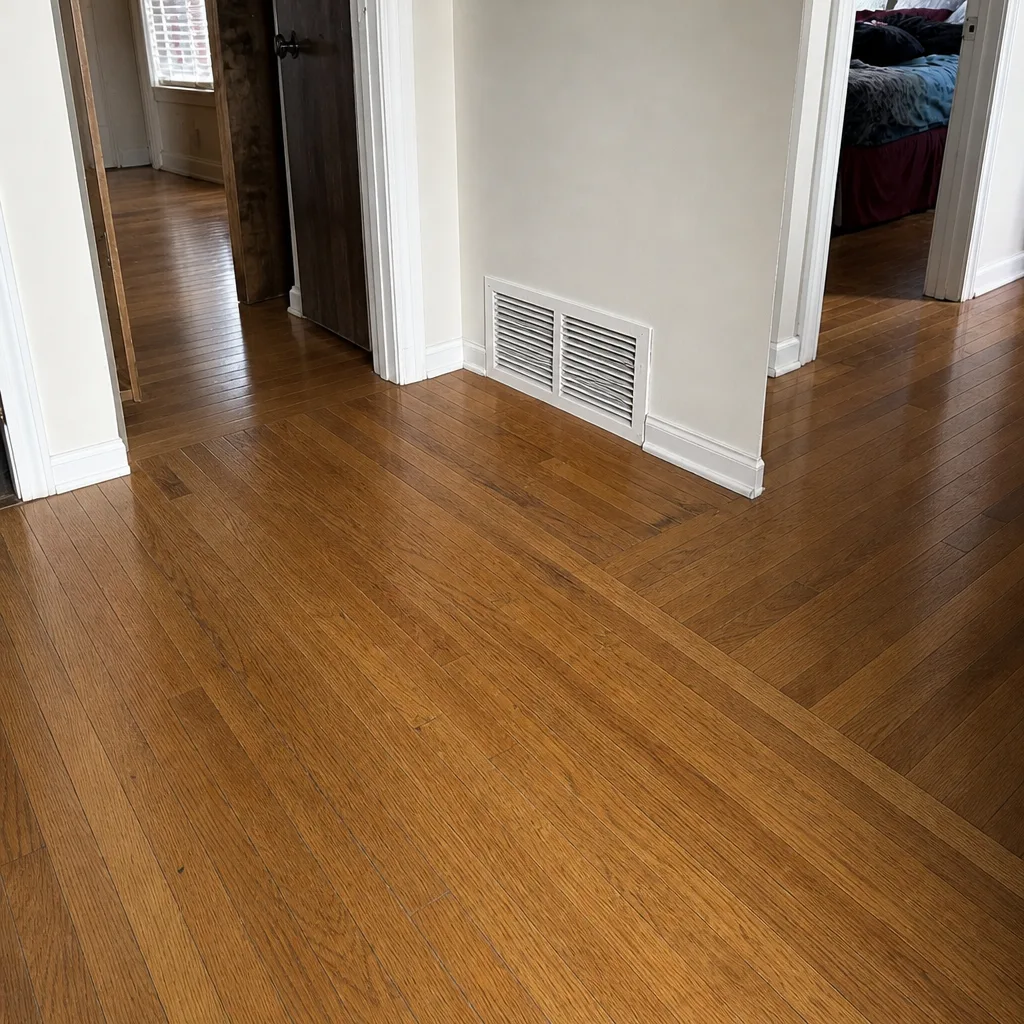
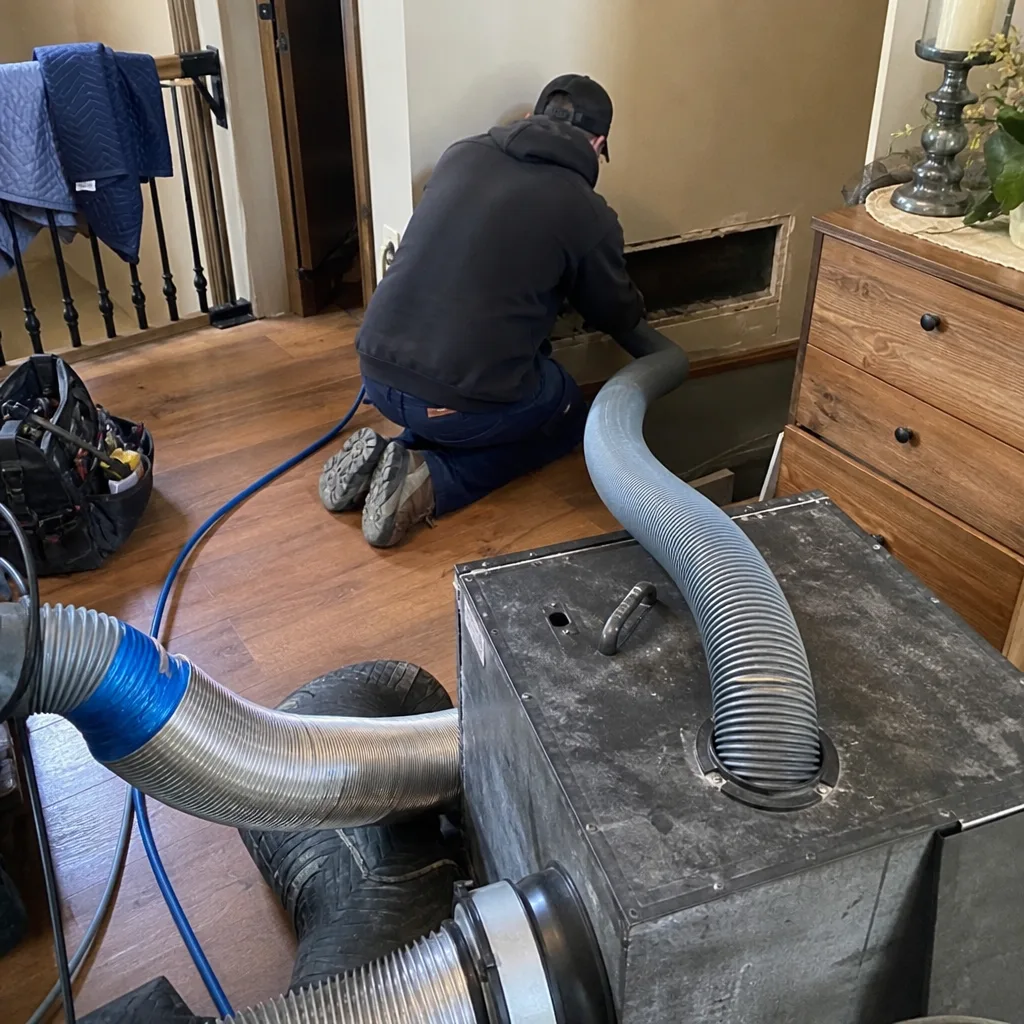
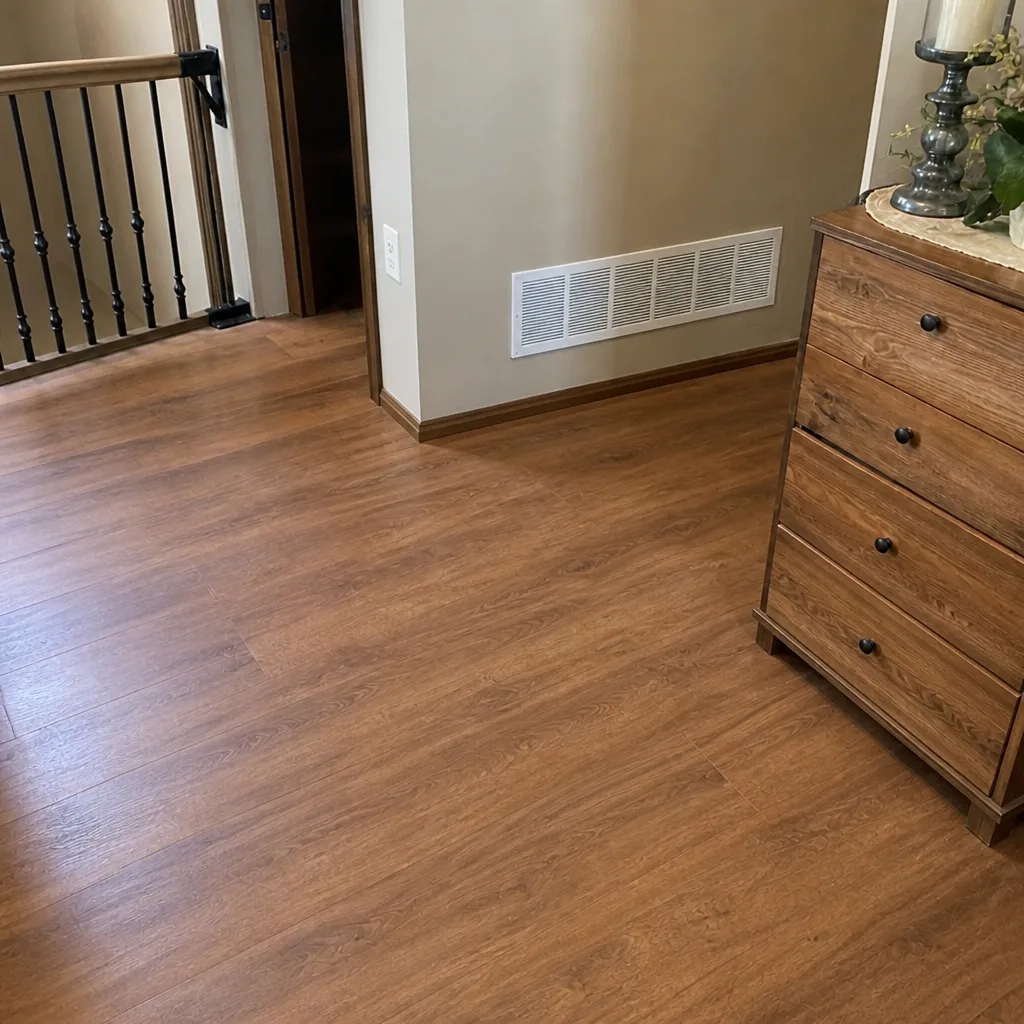
See the difference
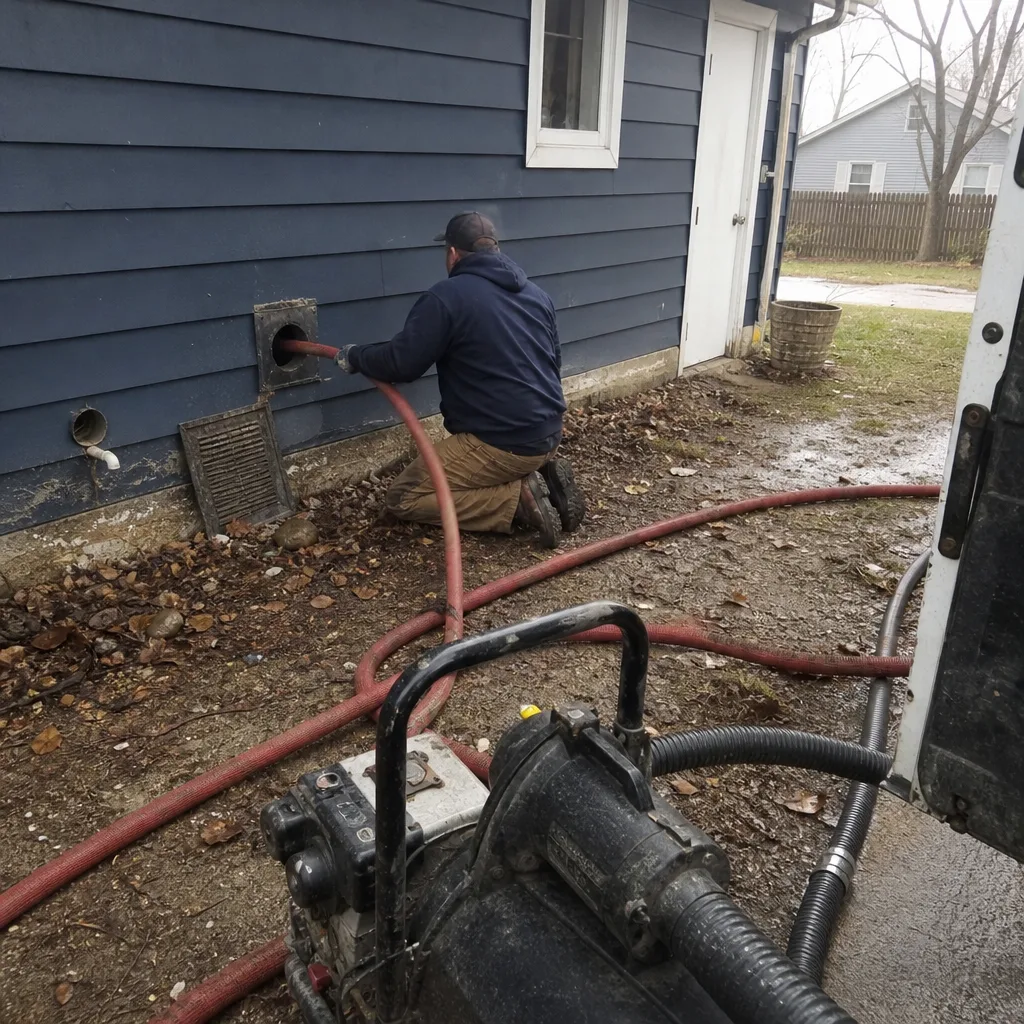 Before
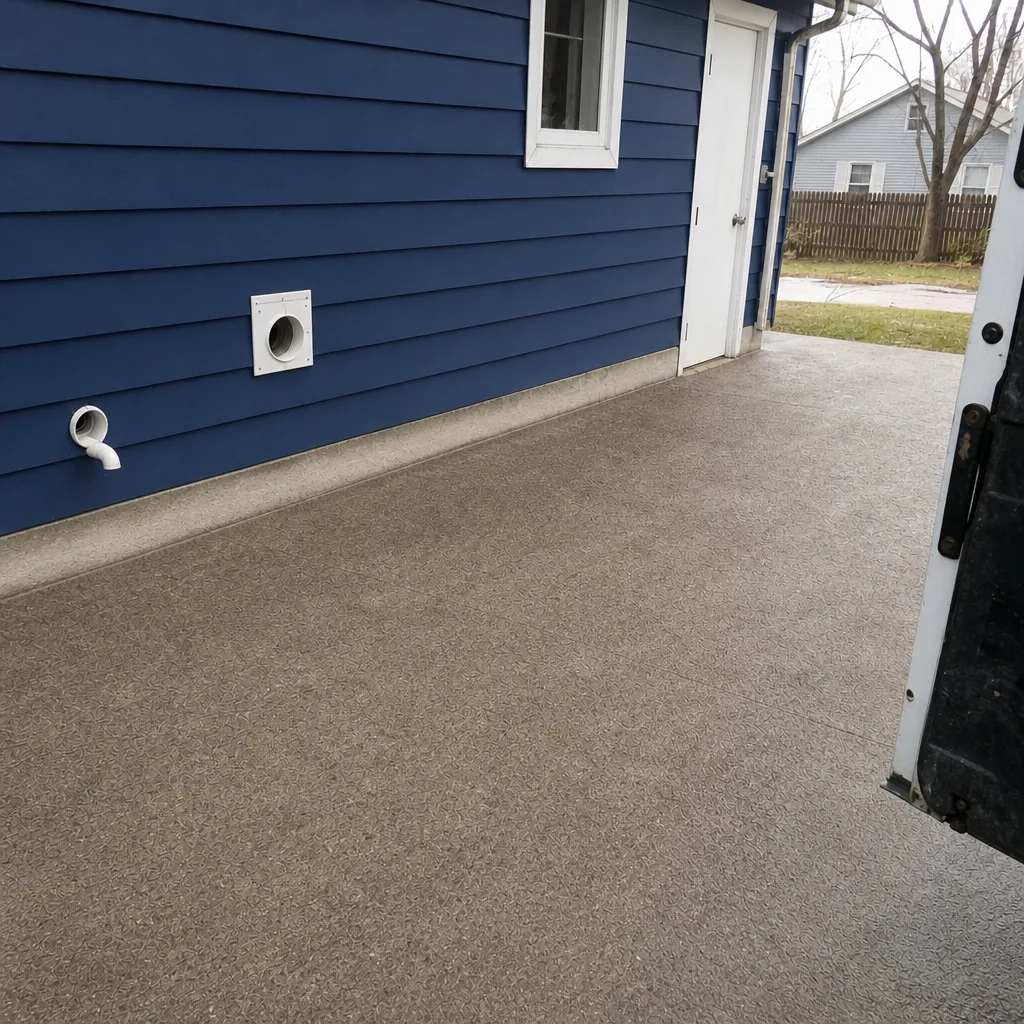 After
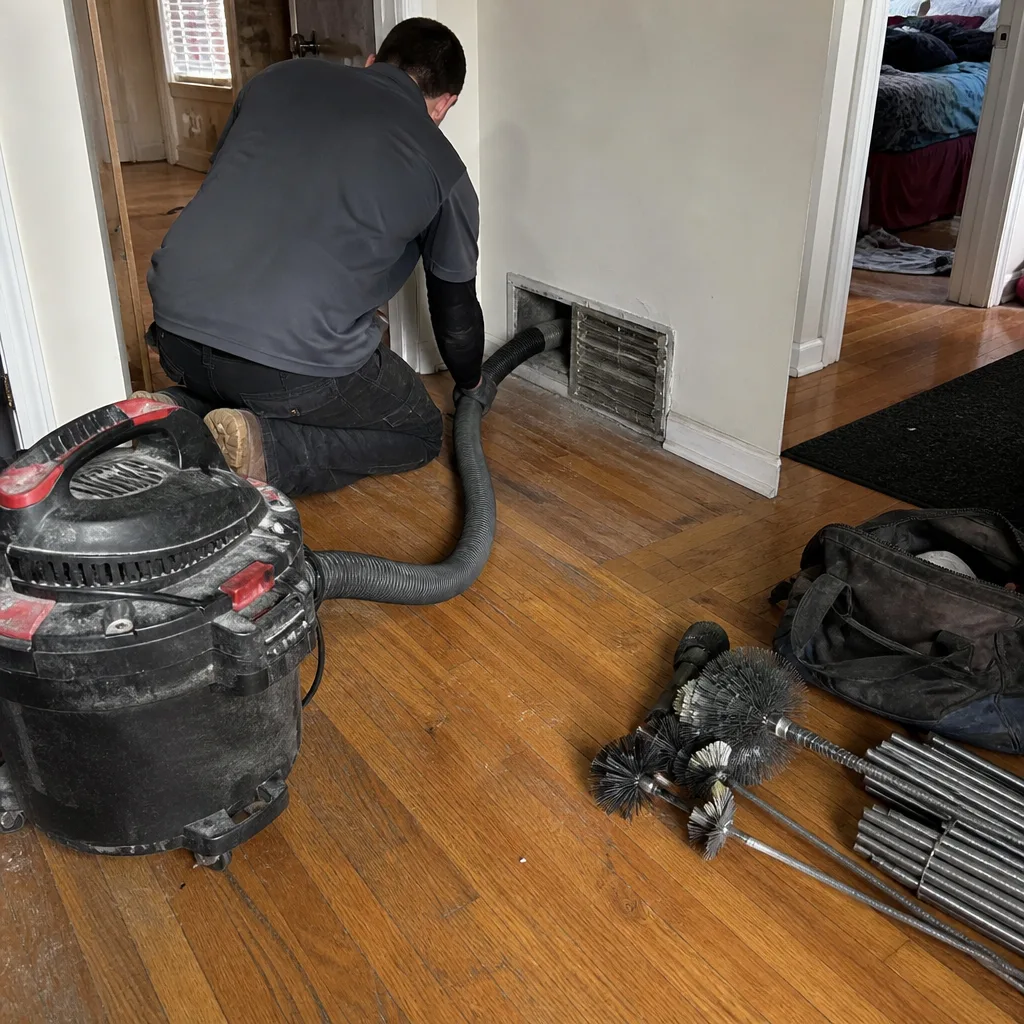 Before
 After
 Before
 After
When to Call a Professional
If your ducts haven’t been cleaned in several years, if you’ve recently completed a renovation that generated drywall dust and debris, if anyone in the home has consistent respiratory sensitivity, or if you’ve noticed weaker airflow from some registers than others, those are all signs it’s worth having the system inspected. The same applies if you’re buying a home in Aurora and don’t know the maintenance history of the ductwork. And if your dryer is taking longer than it used to, or the outside vent flap doesn’t open fully during a cycle, the dryer vent is worth checking. All of those are cases where a professional inspection will tell you whether cleaning or repair is the right next step. Aurora Duct Cleaning offers free estimates in Aurora, and technicians have up to 10 years of experience with the duct configurations that are common in this area. Call (888) 364-6081 to schedule. We answer 24/7. Fast dispatch from 7am to 7pm, Sunday through Friday.
Frequently Asked Questions
Air duct cleaning in Aurora is priced per system, not per vent, based on the number of registers and returns, the duct layout, and the state of the system. The estimate is free and the written estimate sets the price. Call (888) 364-6081 for an exact quote. We answer 24/7. Fast dispatch from 7am to 7pm, Sunday through Friday.
Cheap quotes almost always reflect a cheaper process: fewer registers cleaned, no pre- or post-inspection, no contact cleaning of duct interiors, and no documentation. A low-ball number is a bid for the surface cleaning package. Ask what the cheaper quote includes before you compare it to a full system cleaning, and don’t assume similar-sounding prices mean similar work.
Before-and-after camera documentation and a written job report showing which registers and returns were cleaned, which methods were used, and what was found during inspection. If a contractor can’t produce both, the work isn’t documented. Ask for the report and the photos when the technician finishes.
We use Rotobrush and Nikro systems, both purpose-built duct cleaning equipment used in professional and restoration settings, along with Abatement Technologies filtration capability for post-construction and high-contamination jobs. We don’t use consumer shop vacs. Our process is designed to actually remove debris from duct interiors, not just agitate it at the vent covers.
We handle both. Air duct cleaning is one of our core services, and air duct repair is another. If inspection reveals a crushed flex run, a disconnected joint, or a deteriorated section of duct, we identify it during cleaning and fix it in the same visit, so you don’t need to hire a second contractor. We don’t handle HVAC installation or general HVAC repair, only the duct system itself.
For most Aurora homes, cleaning every few years is enough. Homes that have recently been renovated, that have pets, or that show signs of debris accumulation or weaker airflow should be checked sooner. Homes with flex duct that’s degrading should be inspected rather than assumed. The inspection answers the frequency question better than a fixed schedule does.
The Bottom Line
A duct cleaning brand in Aurora is only as good as the process behind it. Evaluate equipment, method, and documentation before you evaluate a name. Ask the three questions: negative pressure source removal, contact cleaning of duct interiors, and pre- and post-inspection. Check NADCA membership in the national directory, not just on the contractor’s site. Read reviews for specific process language, not star averages. Ask about the Aurora housing stock details (basement air handlers, flex versus rigid, return trunks) and listen for a company that can describe the configurations they’ll encounter. Then get a per-system estimate in writing and confirm that repair is part of the scope. A company that answers all of that well is doing real duct system work, and a company that dodges is selling vent cosmetics. The choice is yours, and now you have the criteria to make it. For a look at our full service scope, visit Aurora Duct Cleaning.
Ready for an inspection? Call (888) 364-6081 for a free estimate. We answer 24/7. Fast dispatch from 7am to 7pm, Sunday through Friday. If you want to review our service in more detail first, start with air duct cleaning and see how the process works on your system. You can also see more about the areas we serve in Aurora.
Written by the team at Aurora Duct Cleaning.