
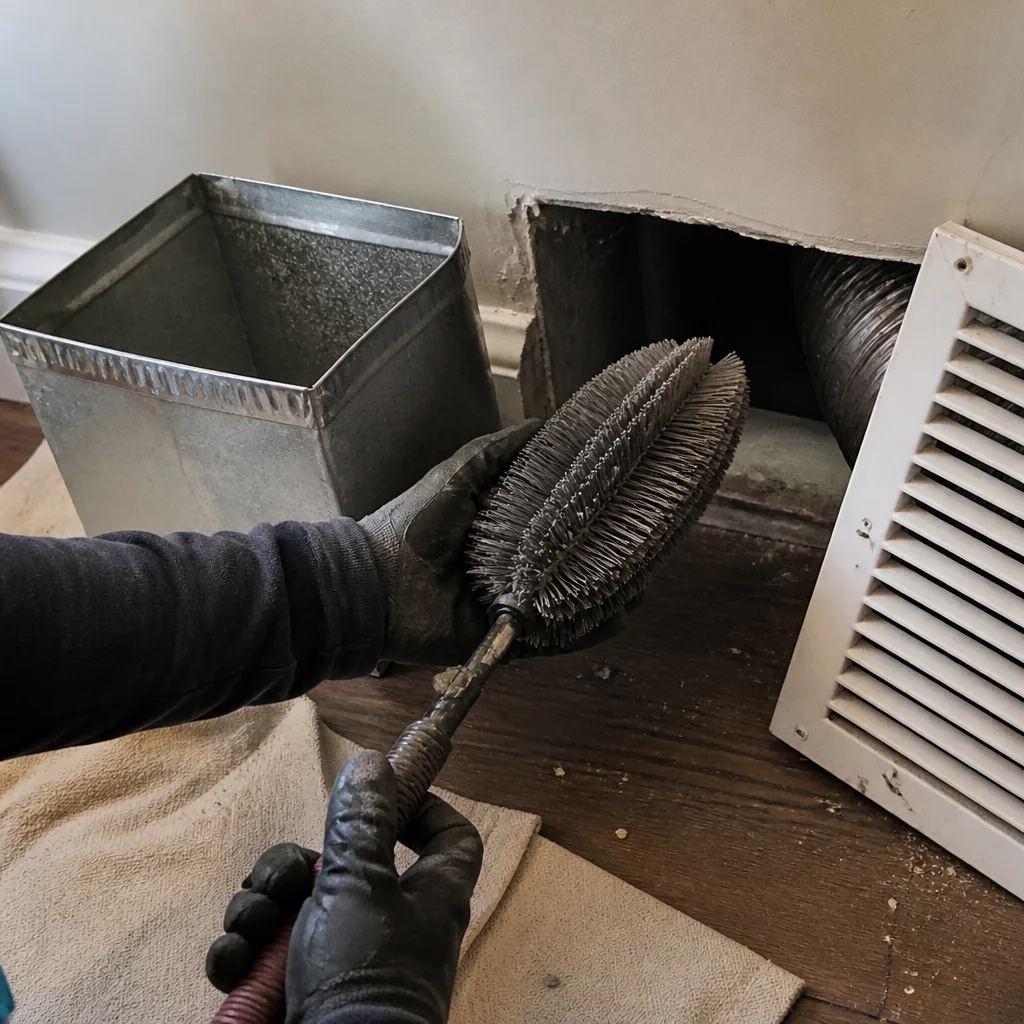
Last updated November 15, 2026
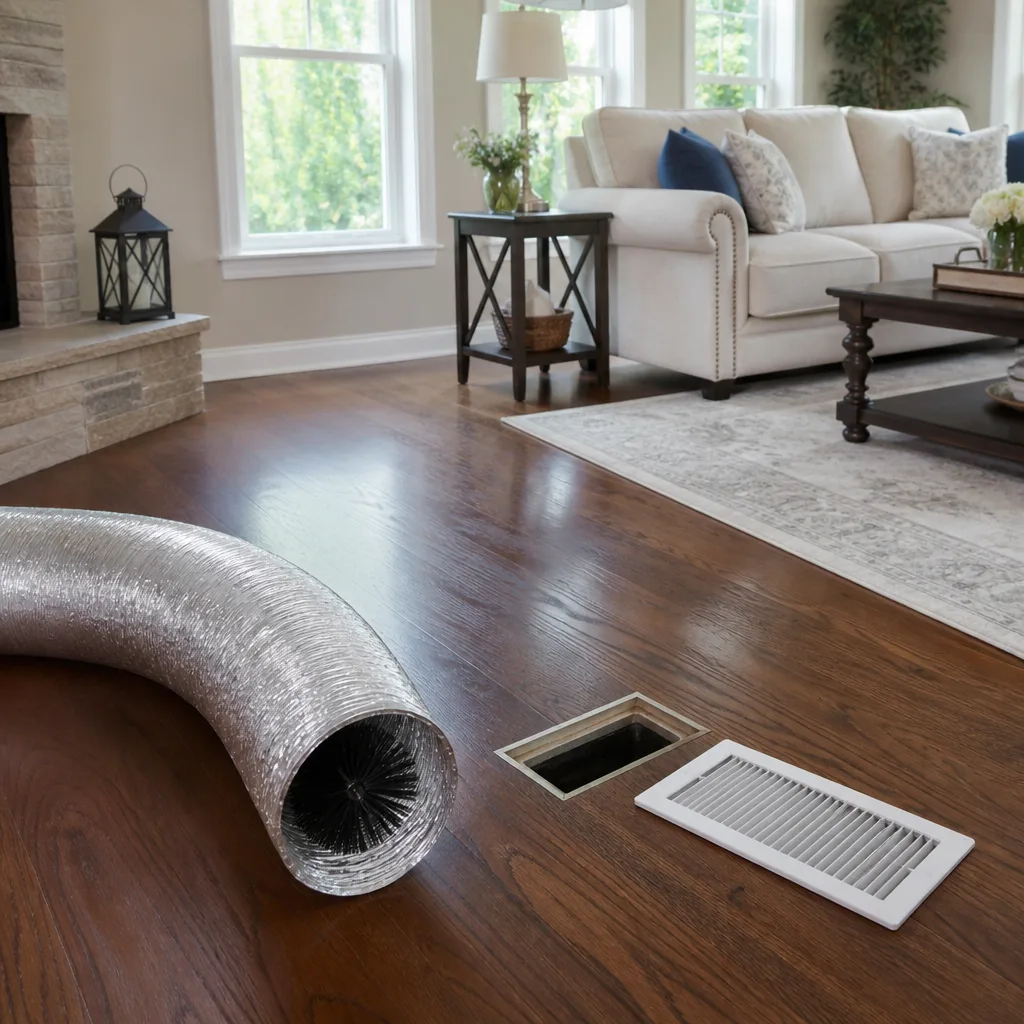 Whole-home duct cleaning
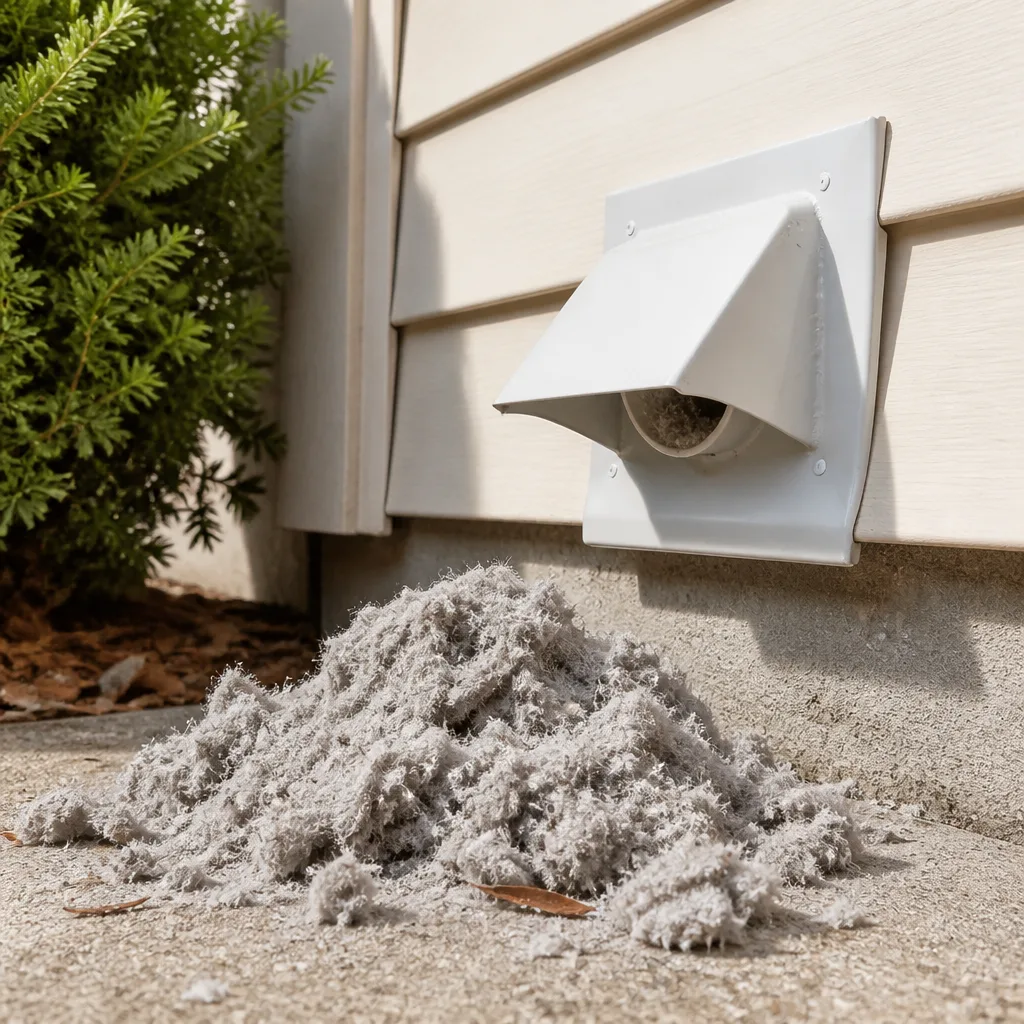 Dryer vent cleaning
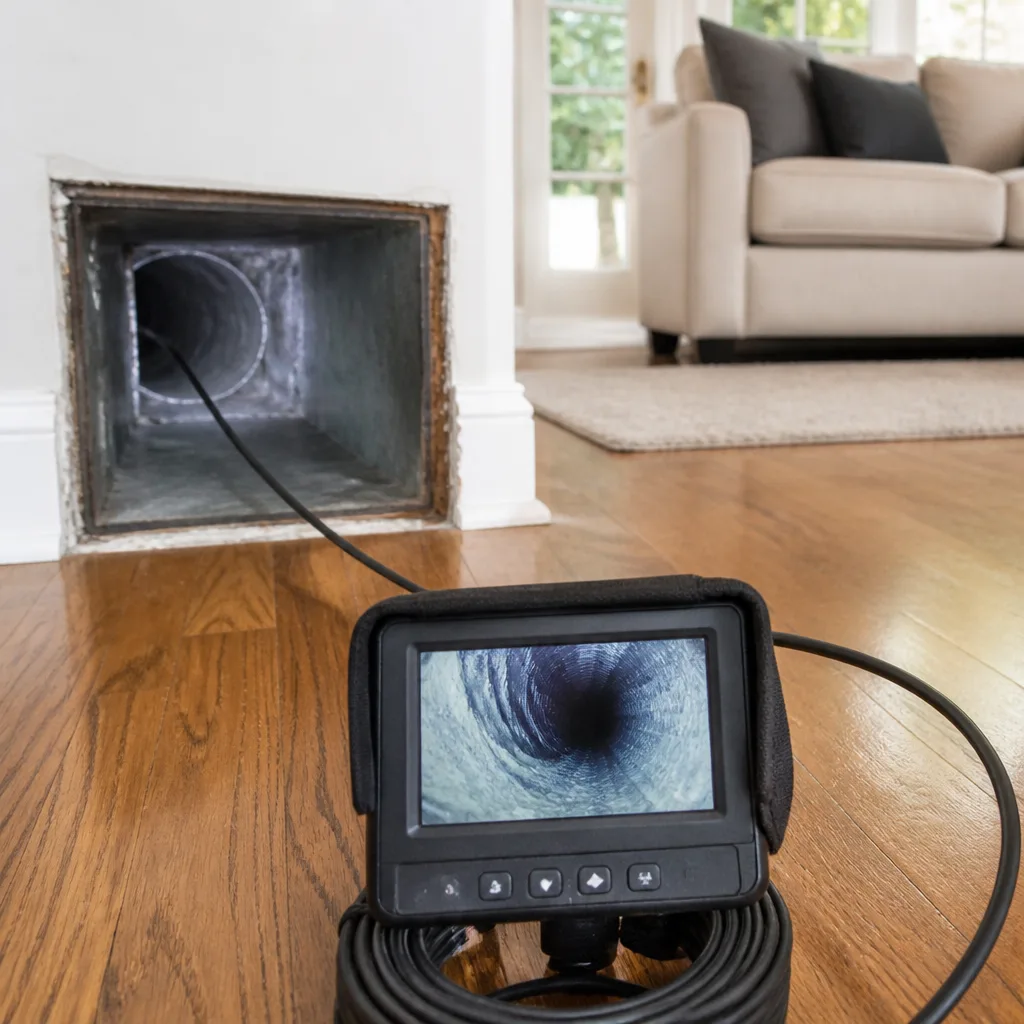 Camera inspection
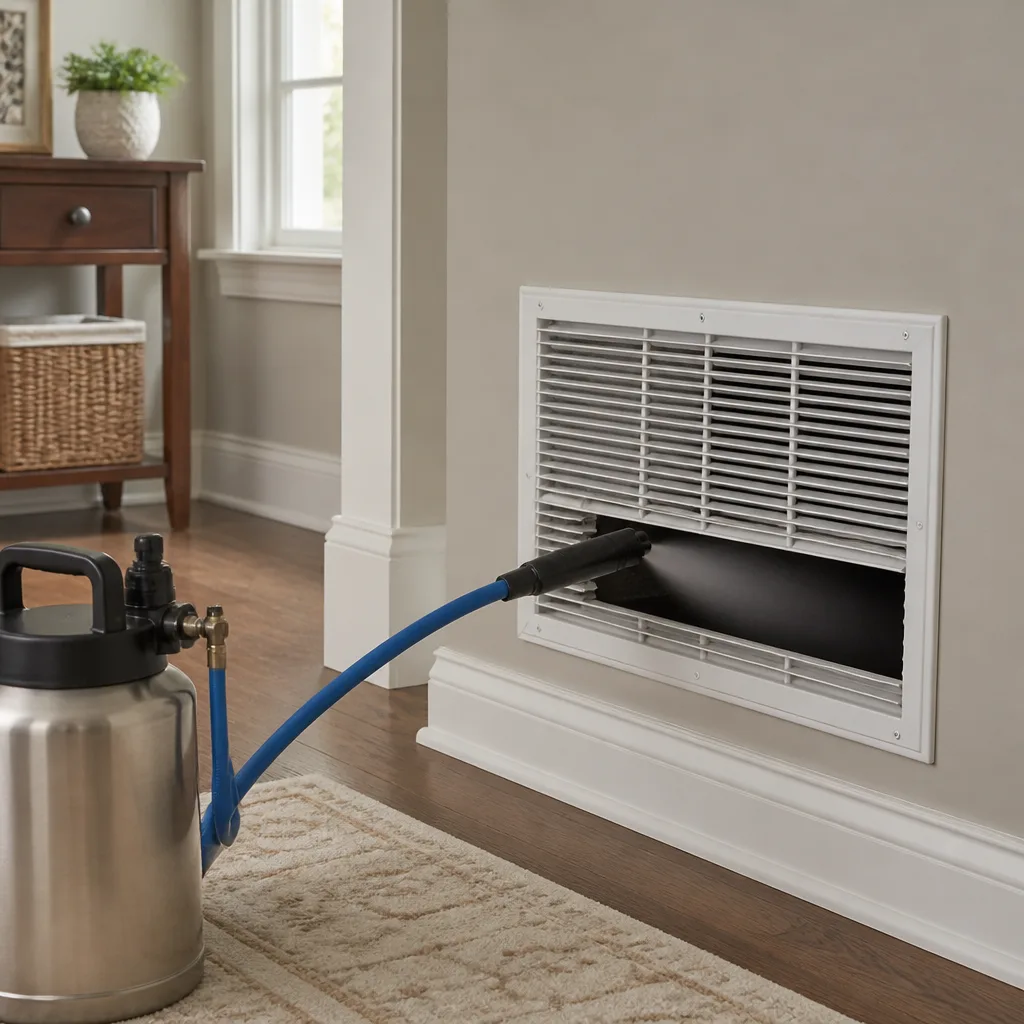 Sanitizing & deodorizing
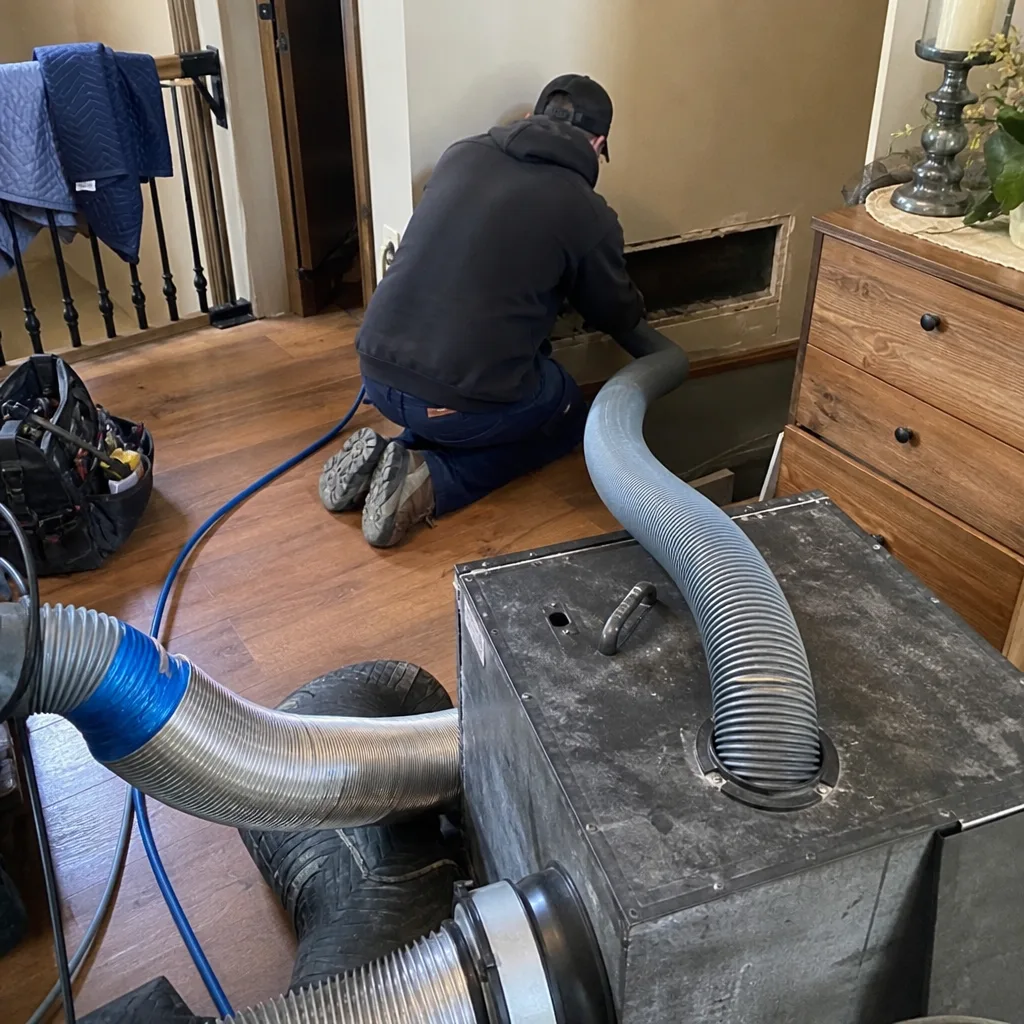
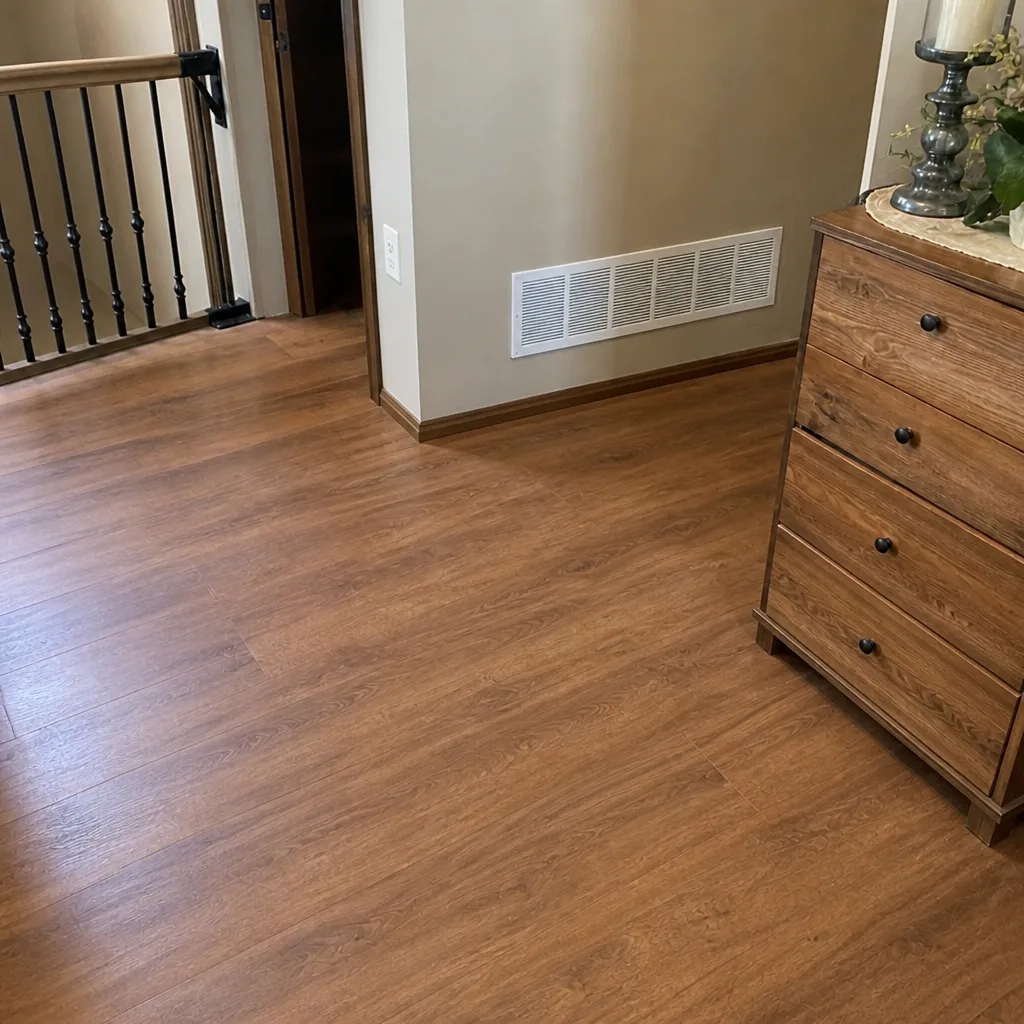
Whole-system duct and dryer vent check with before-and-after photos - you see exactly what came out of your vents
That "$99 whole-house special" is a bait ad - the real number appears once they are in your hallway, or the "clean" is a shop-vac at the register. We photograph the inside of your ducts before and after instead.
Air Duct Cleaning Permits, Codes & Inspections in Aurora, IL: What You Need to Know
Most Aurora homeowners assume duct work is duct work, and that whatever happens behind the drywall stays there. That’s the misconception worth correcting first. Cleaning your ducts almost never triggers a permit. Cutting into them, replacing a section, adding a run, or rerouting a trunk line usually does. The difference between those two things is where a lot of quiet trouble lives: a modified duct system that never got inspected can surface years later at a home sale, an insurance claim, or a renovation walkthrough, and the correction lands on the current owner. This guide explains how Illinois code separates cleaning from modification, when the City of Aurora wants a mechanical permit, how inspectors and buyers find unpermitted work, and what insurers tend to ask about duct maintenance. It’s written for people who want the paper trail right the first time.
Quick Answer
Cleaning air ducts in Aurora, IL does not require a permit. Repairing, replacing, or modifying ductwork generally does, because that work falls under the Illinois Mechanical Code and is treated as an alteration to a mechanical system. The City of Aurora’s Development Services department reviews and issues mechanical permits for that kind of work, and a licensed contractor pulls them before the first cut is made. If a cleaning reveals damaged duct that needs replacement, the repair is the part that needs paperwork, not the cleaning.
Key Takeaways
- Cleaning alone: no permit. Repair, replacement, or rerouting: mechanical permit in most cases.
- The Illinois Mechanical Code governs duct installation and alteration; local code officials enforce it.
- Unpermitted duct work can stall a home sale or complicate an insurance claim, and the fix is usually more expensive than the permit would have been.
- Duct systems concealed behind drywall are inspected before the walls close during new construction and major renovation.
- Asking a contractor for a permit number is a normal, expected question, not an insult.
Styles & brands we work with
- Whole-home duct cleaning
- Dryer vent cleaning
- Camera inspection
- Sanitizing & deodorizing
Table of Contents
- Does Illinois code treat duct cleaning differently from duct repair?
- When does Aurora require a mechanical permit for duct work?
- How do you verify a contractor is working legally in Aurora?
- How does unpermitted duct work surface during a home sale?
- Duct inspection in new construction and renovation
- What insurers ask about duct maintenance and DIY modifications
- Common mistakes to avoid
- Frequently asked questions
Does Illinois code treat duct cleaning differently from duct repair?
Yes, and the distinction is the whole ballgame. Cleaning is maintenance. Repair and replacement are alterations to a mechanical system, and alterations fall under the Illinois Mechanical Code. That code sets requirements for duct materials, sizing, support, sealing, clearances, and how a system connects to the furnace or air handler. A code official reviewing a permit application is checking that the work will meet those requirements, not whether the ducts were dusty.
Here’s how the line gets drawn in practice:
- Cleaning only. Brushing, agitating, and vacuuming the interior of an existing duct system, plus cleaning registers and grilles. No cutting, no new material, no change to the layout. No permit.
- Repair. Replacing a crushed or disconnected section, sealing joints and seams, reattaching a boot to a register, fixing a sagging flex run. This is where a permit usually comes in, because it’s an alteration to the mechanical system.
- Modification. Adding a new supply run, moving a register, rerouting a trunk line, changing duct size to fix a pressure problem. Definitely a permit in most jurisdictions, and Aurora is no exception.
- Replacement. Removing an entire duct system and installing a new one, common in older Aurora homes where the original galvanized duct has rusted through or the layout was designed for a different furnace. Full mechanical permit.
Where it gets murky is the middle ground. A technician finds a section of flex duct that’s been crushed under a floor joist since the house was built. Is re-running that section a repair or a modification? Honest answer: it depends on scope, and the right move is to ask the city before doing it, not after. We’ve seen enough duct systems in Aurora to know that what looks like a small fix behind a vent cover is sometimes a three-foot section that needs to be cut out and rebuilt. The paperwork follows the scope, not the label.
If you’re starting from zero and want the cleaning side explained first, our page on air duct cleaning covers the process, the equipment, and what a proper job actually involves.
When does Aurora require a mechanical permit for duct work?
Aurora’s Development Services department handles building permits, including mechanical permits, for work done inside the city. The general rule: any alteration, replacement, or new installation of ductwork requires a mechanical permit before work begins. Cleaning does not. Sealing that’s incidental to cleaning, like taping a joint you’ve opened to vacuum behind, generally does not rise to permit level. Cutting out a duct section and installing new material does.
The safest way to know for a specific job is to call Development Services and describe the scope in plain language. They’ll tell you whether it needs a permit and what the review involves. Do this before the work, not after. Trying to pull a permit for work already completed is a harder conversation than getting one up front, and some inspectors will ask to see the work before it’s covered back up.
What a duct-related mechanical permit typically covers:
- Scope description. What’s being replaced or added, and where in the house.
- Materials and sizing. Duct type, dimensions, and how it connects to the existing system.
- Contractor information. Who’s doing the work and their licensing status.
- Inspection scheduling. A rough-in inspection before the ducts are concealed, and a final inspection once the system is complete and running.
The permit itself is usually the smallest line item on the job. What costs real money is what happens when work gets done without one, especially in older Aurora housing stock. The city has blocks of homes from the early and mid-twentieth century where duct systems have been modified two or three times over the decades, sometimes well, sometimes not. Each undocumented change makes the next one harder to sort out.
If your home is in one of Aurora’s older neighborhoods, and you’re not sure what’s behind the walls, that’s a good reason to have the ducts inspected before you plan any renovation, not after. For a broader look at what we do across the city, see Aurora.
How do you verify a contractor is working legally in Aurora?
Ask three questions before anyone touches your ductwork: Are you licensed? Will you pull the permit for this job? Can I see the permit number when it’s issued? A legitimate contractor answers all three without hesitation. A contractor who says a permit isn’t needed for a job that clearly involves replacing duct sections is telling you something about how they operate.
Illinois regulates HVAC contractors at the state level, and Aurora’s permitting process assumes the contractor is licensed to do the work being permitted. You can verify licensure through the state, and the permit record itself is a public document tied to your address. When work is permitted and inspected, there is a paper trail that follows the house. When it isn’t, there’s a gap.
Here’s what to look for when you’re evaluating a duct contractor:
- They distinguish cleaning from repair in the quote. If a contractor treats every job as one flat service, they probably aren’t thinking about code. A real assessment separates the cleaning scope from any repair scope, because those are different jobs with different requirements.
- They know the equipment for the job. Professional duct cleaning isn’t a shop vac and a brush. Purpose-built systems like Rotobrush or Nikro equipment, and filtration capability from Abatement Technologies for high-particulate or post-renovation environments, exist for a reason. A contractor who shows up with consumer tools isn’t equipped to find the problems that lead to repairs in the first place.
- They’ll tell you when a repair isn’t necessary. The opposite of upselling is an honest no. If the ducts are intact and just dirty, a contractor who also does repairs has an incentive to say so.
- They use protection. Floor and surface protection during in-home work is a basic professionalism signal, and the Guardsman standard is one we hold ourselves to.
We can’t speak for everyone in the market, but in our experience the contractors who pull permits are the same ones who document their work with before-and-after photos and write down what they found. Those habits go together.
How does unpermitted duct work surface during a home sale?
Home inspections are where unpermitted duct work gets discovered, and the timing is rarely convenient. A buyer’s inspector walks the house, checks the furnace and air handler, and traces visible duct runs. They look for signs of alterations that don’t match the mechanical permit history on file with the city. And in Kane County and across the Aurora area, permit records are searchable, so a diligent buyer’s agent can compare what’s on record with what’s been done.
What triggers a flag:
- New-looking duct material in a part of the house where no permit was ever pulled
- Registers added or moved without a corresponding permit record
- Duct runs that don’t match the original layout shown on older drawings or inspection reports
- Joints and seams sealed in ways that suggest a recent retrofit
- Signs of a duct system that was sized for a different furnace than the one currently installed
When unpermitted work surfaces, the correction process usually follows a similar path:
- The buyer’s inspector notes it. The note goes into the inspection report as a concern, even if the work is functional.
- The buyer asks for documentation. Typically a permit record, an inspection sign-off, or a statement from the contractor who did the work.
- The seller has to either produce records or remediate. Sometimes the fix is a retroactive permit, which requires an inspection of work already concealed. Sometimes it’s opening up drywall so an inspector can see what’s there. Sometimes it’s more involved than that.
- The cost usually lands on the seller, or the deal reprices. Either way, a job that would have cost a modest amount with a permit up front ends up costing far more under time pressure.
This is the practical argument for the whole guide. Duct work that’s done right and permitted properly is not just code-compliant, it’s resale-ready. Duct work done off the books is a liability waiting for a walkthrough.
Duct inspection in new construction and renovation
In new construction and major renovation, duct systems get inspected at stages that don’t exist in a typical service call. The most important stage is the rough-in: the ducts are installed, connected to the furnace or air handler, and then inspected before drywall closes them in. Once the walls are up, most of the duct system is unreachable without demolition. That’s why the rough-in inspection matters so much, and why skipping it, or missing a problem it would have caught, is expensive later.
What a rough-in inspection looks for:
- Duct sizing and layout that matches the approved plans
- Materials that meet code requirements for the installation location
- Proper support and clearances from combustible materials
- Sealed joints where the code requires sealing
- Correct connections to plenums, boots, and registers
- Any penetrations through fire-rated assemblies handled correctly
Aurora has seen a lot of renovation activity in its older neighborhoods, in homes where original duct systems predate modern code requirements. When a renovation opens up a wall or ceiling, it sometimes reveals duct runs that no longer match the layout of the home, or that were never installed to current standards. An inspector will flag those, and the correction usually has to happen before the project continues. It’s better to know during design than halfway through construction.
The same logic applies to the “minor” renovation, the kitchen or bath remodel that turns out to involve moving a register. That register move is a duct modification. It needs a permit if it’s changing the system’s layout, and it needs to be inspected before it’s covered up. Small scope does not mean exempt.
In our experience, homeowners who plan for the inspection step in a renovation save themselves the scramble of discovering it after the contractor has already framed and boarded. For a related angle, our guide to dryer vent cleaning covers the venting side of the same question: how the systems behind your walls connect to safety, and why the paper trail matters.
What insurers ask about duct maintenance and DIY modifications
Homeowners insurance policies are not uniform, so we can’t tell you what your specific policy will or won’t cover. What we can tell you is the pattern that shows up in claims involving indoor air quality, water intrusion into duct systems, or fire events with a venting connection: insurers tend to ask whether the equipment involved was professionally maintained, and whether any modifications were done by a qualified contractor or by the homeowner.
That question cuts to the core of the permit discussion. A duct system that has been professionally serviced, with records showing inspections and repairs, tells an insurer the system was maintained. A duct system with evidence of DIY modifications, cut and tapped runs, mismatched material, no permit record, is a harder story to tell. In an air quality claim, the question is sometimes whether the condition was pre-existing and known. In a fire claim involving a venting system, the question is sometimes whether the vent was maintained to a professional standard.
What helps your position:
- Keep records of professional service. Before-and-after photos, invoices, and inspection reports, dated and tied to your address.
- Keep permit records. If duct work was permitted, the permit number and the inspection sign-off should be in your file. If it wasn’t permitted, that’s worth knowing before you need to file a claim.
- Don’t rely on DIY modifications in high-consequence systems. Ductwork running through a furnace closet or near combustion appliances is not the place to save money. The code requirements exist because of real risk.
If you’re not sure what your policy says about duct maintenance, ask your agent directly and get the answer in writing. It’s a five-minute question with a long tail.
Common Mistakes to Avoid
- Assuming cleaning and repair require the same paperwork. They don’t. The cleaning is maintenance; the repair is an alteration. If a contractor treats both as one job, ask where the line is on your specific scope. In Aurora, that question has a real answer from Development Services.
- Letting a repair get done without a permit because it seems small. A three-foot duct section being replaced under a floor joist feels minor until an inspector at a home sale wants to know why the permit record doesn’t match the work. The permit costs a fraction of what the retrospective conversation costs.
- Covering concealed duct work before the inspection. During a renovation, that means not closing walls before the rough-in is signed off. Once the drywall goes up, the inspected condition is lost, and getting it back means opening the wall.
- Using a contractor who won’t show the permit number. In Aurora, that’s a warning sign. A licensed contractor pulling a permit has nothing to hide and will give you the number without being asked twice.
- Skipping documentation of service. If a system was professionally cleaned and inspected, keep the records. If you ever need to file a claim or sell the house, the paper trail is the point.
- Treating the dryer vent as separate from the duct discussion. Both run behind your walls and both are subject to fire risk and maintenance requirements. A dryer vent that’s never been checked is its own kind of undocumented system, and it’s the one with the most dangerous failure mode.
- Asking a duct cleaning company to do HVAC installation or mold remediation. Those are different trades and different scopes. Knowing what a duct specialist does, and what they don’t, keeps the jobs on the right track.
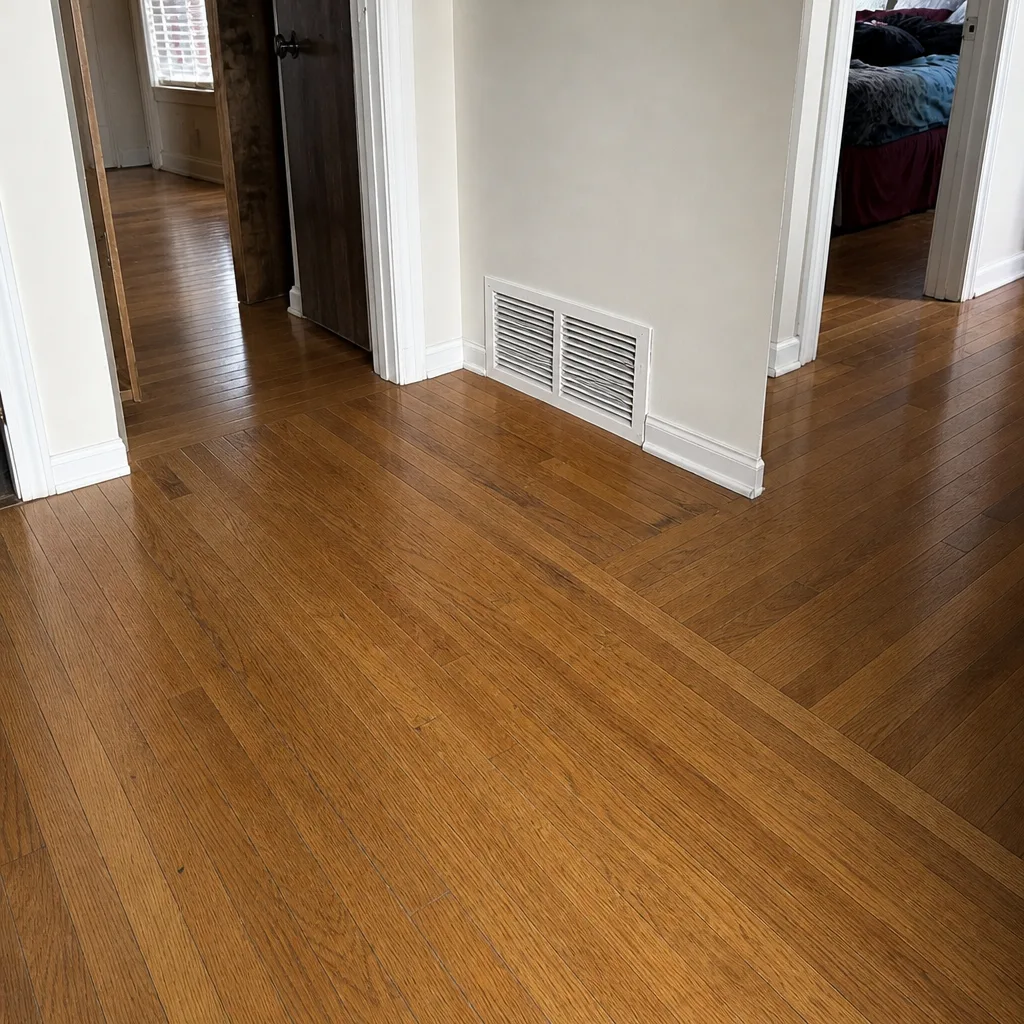
See the difference
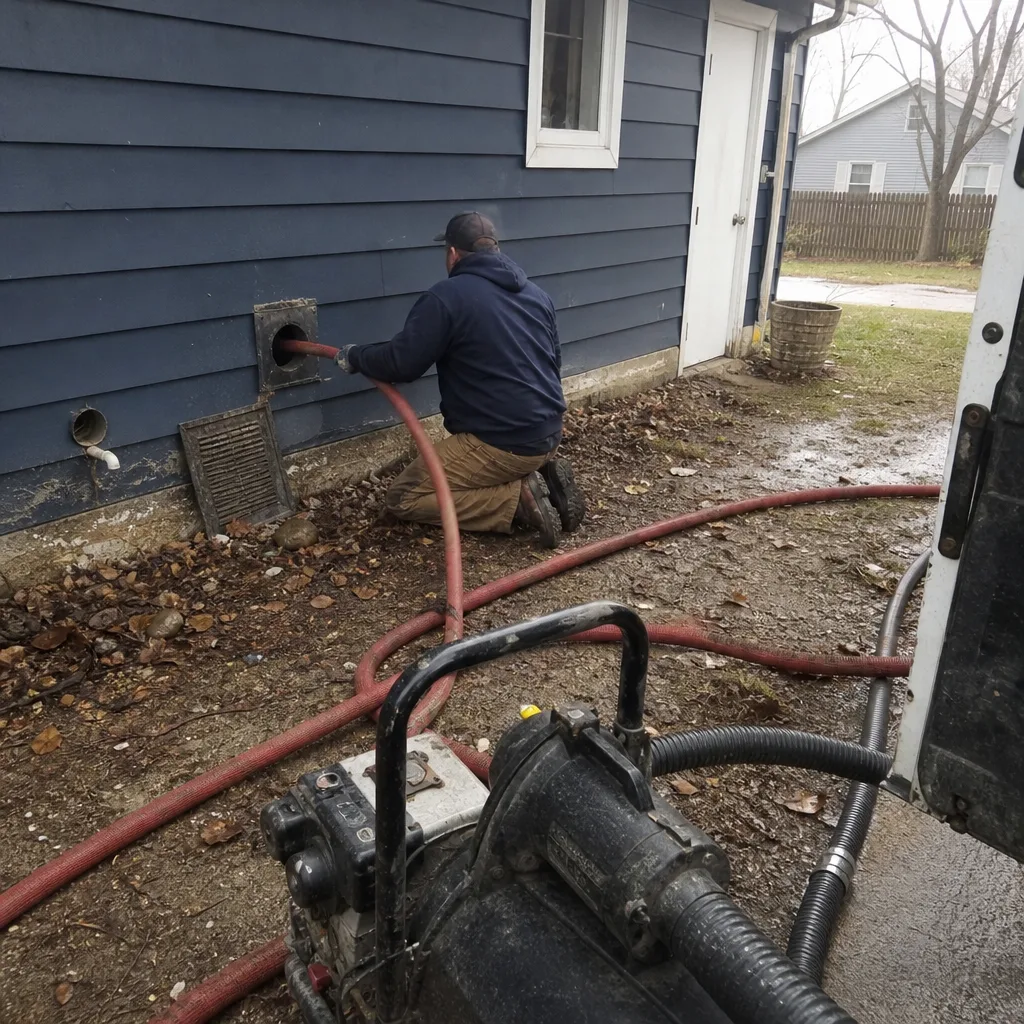 Before
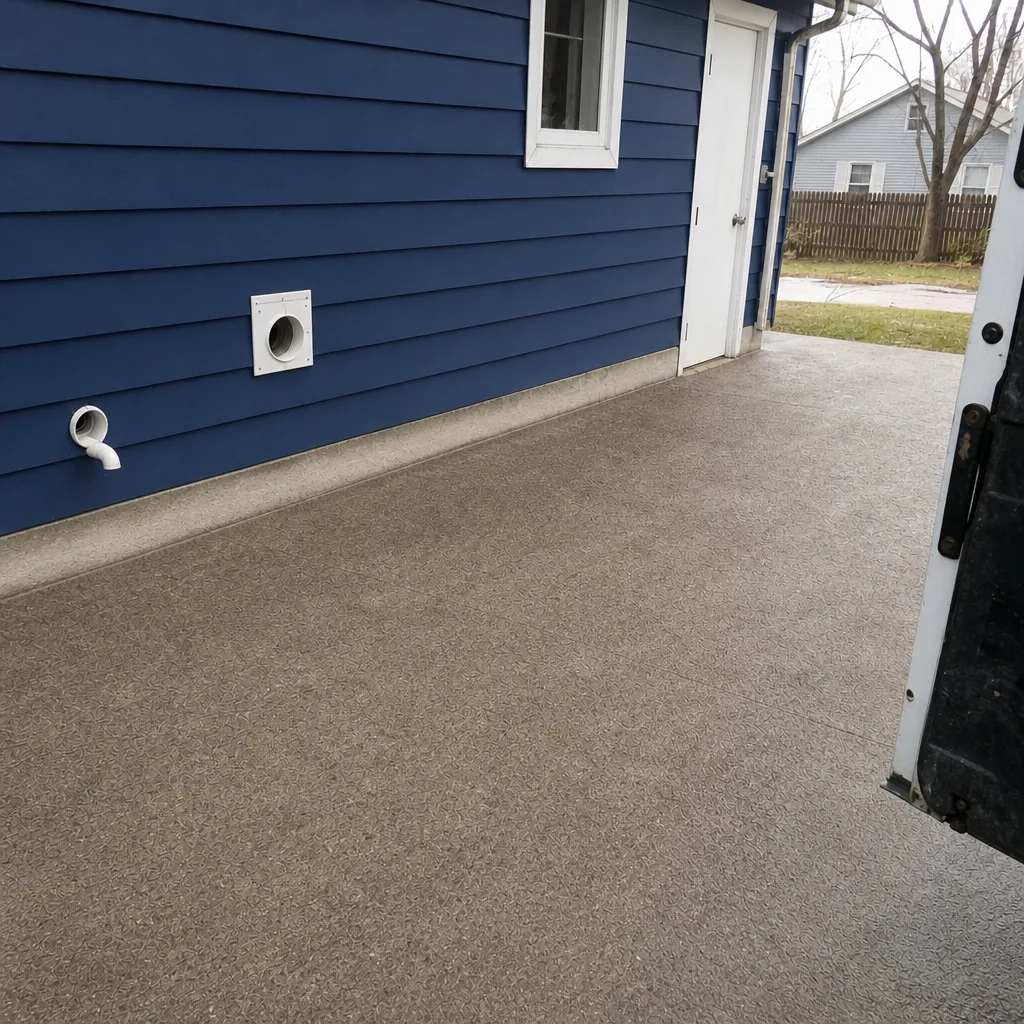 After
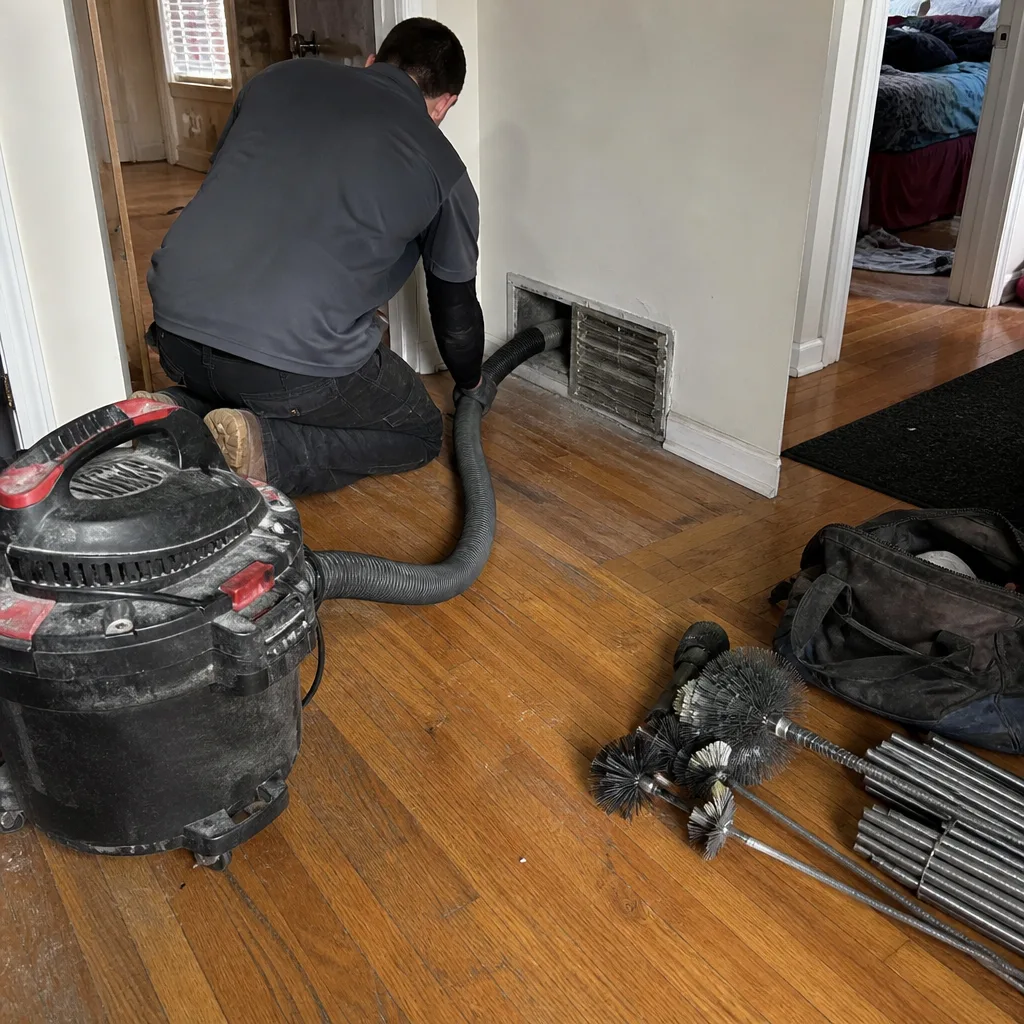 Before
 After
 Before
 After
When to Call a Professional
Some jobs should be scheduled on your timeline. Others shouldn’t wait, and the difference is usually obvious once you list the symptoms. Call a professional if you’re seeing visible dust blowing from registers, if the house is dustier than it should be, if your energy bills have climbed without explanation, if there’s a musty smell coming from the supply vents, or if you’ve recently finished a renovation and the ducts took on construction debris. Call any time the duct system is suspected of damage, because a collapsed or disconnected run isn’t a cleaning problem, it’s a repair problem, and it needs to be scoped before anyone vacuums. In Aurora, we offer free estimates and don’t rely on a coupon to get in the door: we set one flat price per system, agreed in writing before the work starts, no per-vent pricing, and before-and-after photos of your own ducts so you can see what was done. Repair findings get documented, and if a permit is required for the fix, that conversation happens before the work, not after.
Frequently Asked Questions
No. Cleaning your air ducts in Aurora does not require a permit, because it’s maintenance rather than an alteration to a mechanical system. Repairing, replacing, or rerouting ductwork generally does require a mechanical permit from the City of Aurora’s Development Services department. If a cleaning reveals damaged duct, the repair needs a permit even though the cleaning didn’t.
The Illinois Mechanical Code sets the requirements for duct materials, sizing, support, sealing, and connections, and it’s the code a local permit review is based on. Aurora’s code officials enforce it through the permitting and inspection process. Cleaning is not governed by the mechanical code as a permit matter, but the installation standards for the duct system still apply to any repair or replacement.
Possibly, and more often than sellers expect. A buyer’s home inspector looks at the furnace, duct runs, and visible modifications, and permit records in Kane County are searchable, so a diligent buyer can compare what’s on record to what’s been done. Unpermitted duct changes can stall a sale until the seller produces documentation or remediates the work, which usually means opening up walls for an inspection.
Adding a new supply register is a duct modification, and modifications generally require a mechanical permit. The scope of the addition determines what the permit review involves, but the safe assumption is yes. If you’re planning a renovation that moves or adds a register, tell the contractor early so the permit and the inspection get built into the schedule instead of discovered after drywall.
During new construction or major renovation, the rough-in inspection happens after the ducts are installed and connected but before the walls are closed. The inspector checks duct sizing and layout against approved plans, material compliance, support and clearances, joint sealing, and correct connections to plenums and registers. Once drywall goes up, most of that system is unreachable, so the rough-in is the inspection that counts.
There’s no universal answer, but most homes benefit from a professional cleaning every few years, sooner after a major renovation or in a home that’s had pets or long-term occupants. Cleaning frequency doesn’t change the permit question. What does change it is whether the cleaning reveals damage: if it does, that’s the repair scope, and the repair scope is what requires a permit.
The Bottom Line
In Aurora, the permit question splits cleanly along one line: cleaning is maintenance, and repair or modification is an alteration to the mechanical system that the Illinois Mechanical Code governs. Cleaning doesn’t need a permit. Cutting in a new duct section, moving a register, or replacing a duct system does, and the City of Aurora’s Development Services department handles that review. The reason to care isn’t the permit cost, it’s the record. Permitted and inspected work is documentable at resale and defensible in an insurance claim. Unpermitted work is a question waiting to be asked. If a cleaning turns up duct damage, handle the repair properly, with a permit, in one visit, rather than letting it become a future problem.
Call Aurora Duct Cleaning at (888) 364-6081 for a free estimate. We answer 24/7. Fast dispatch from 7am to 7pm, Sunday through Friday. We use professionally rated equipment from Rotobrush and Nikro, work with Honeywell and Aprilaire IAQ systems, and offer Aurora Duct Cleaning across the city, with air duct repair and dryer vent cleaning as part of the same relationship. Our technicians have up to 10 years of experience. One flat price per system, agreed before work starts, and before-and-after photos of your own ducts.
Written by the team at Aurora Duct Cleaning.