
Last updated November 15, 2026
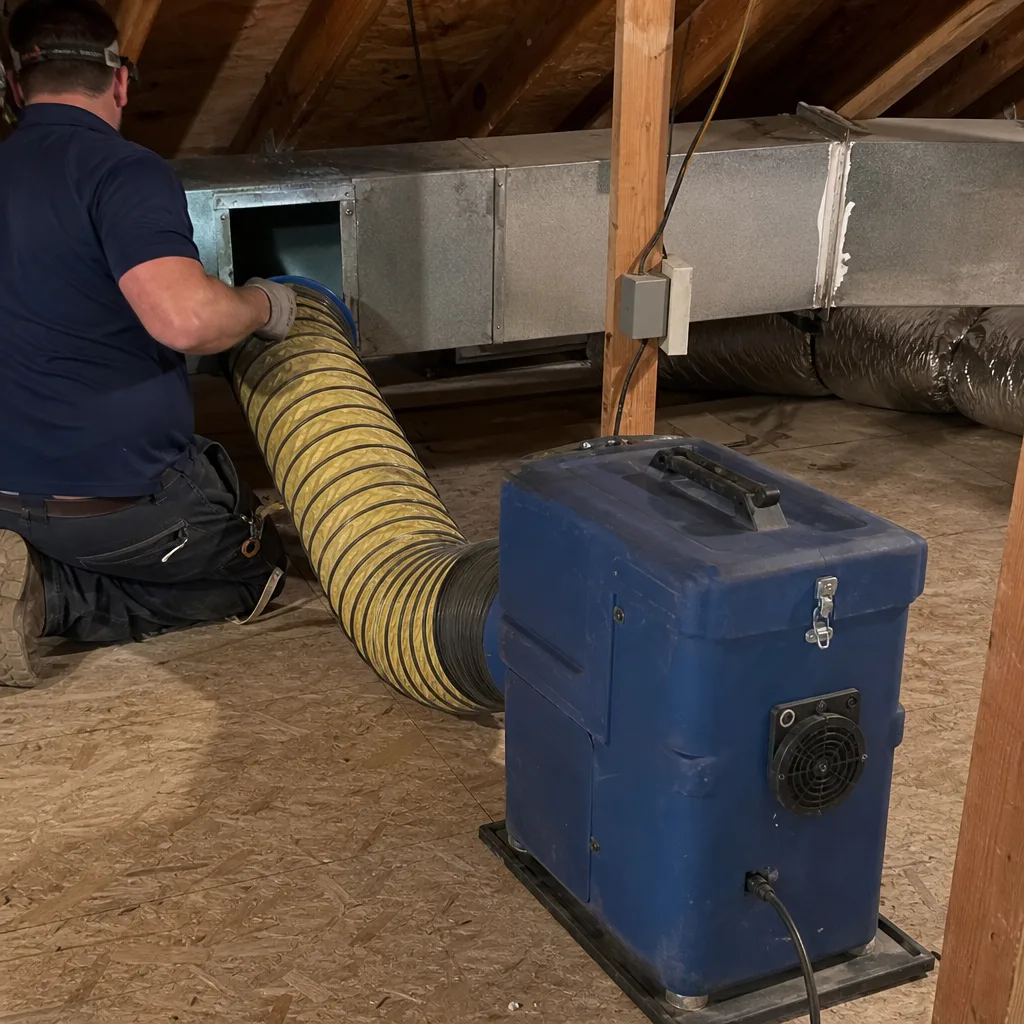
 Whole-home duct cleaning
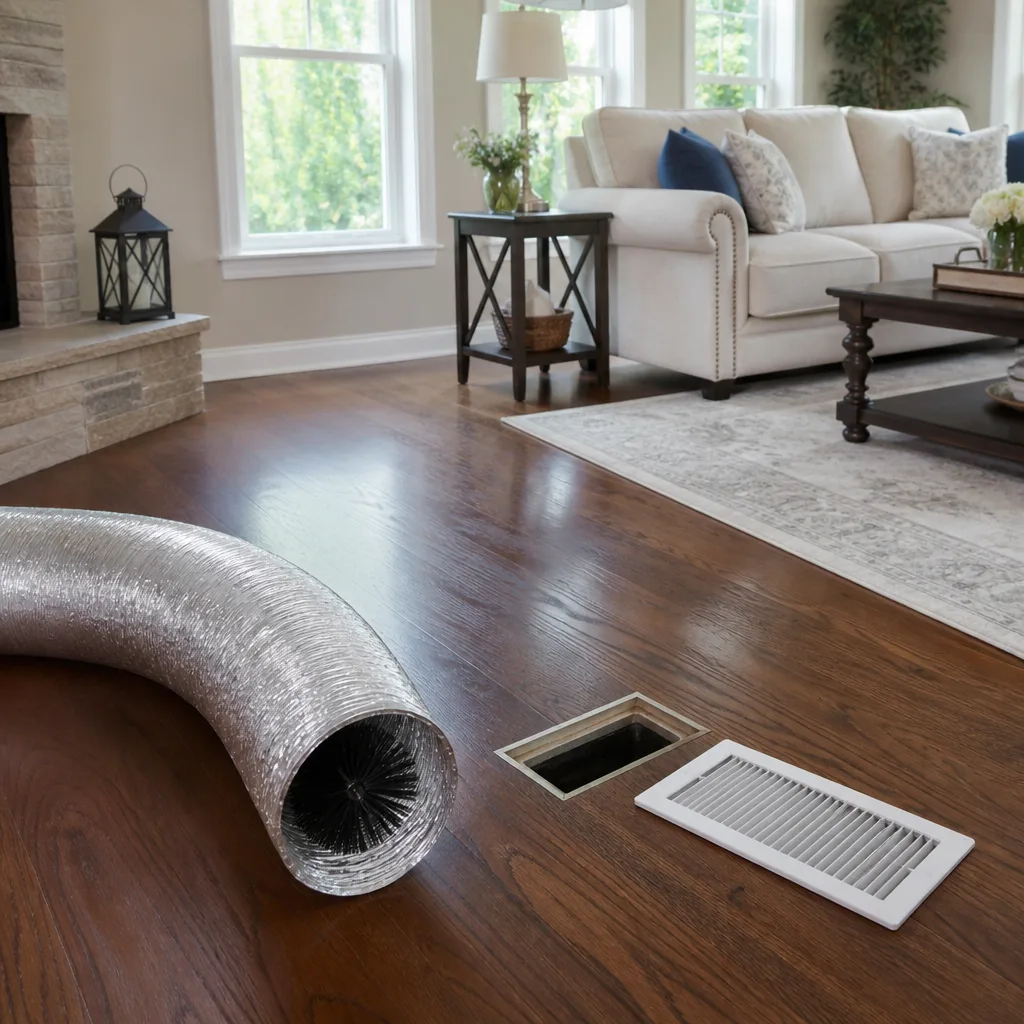
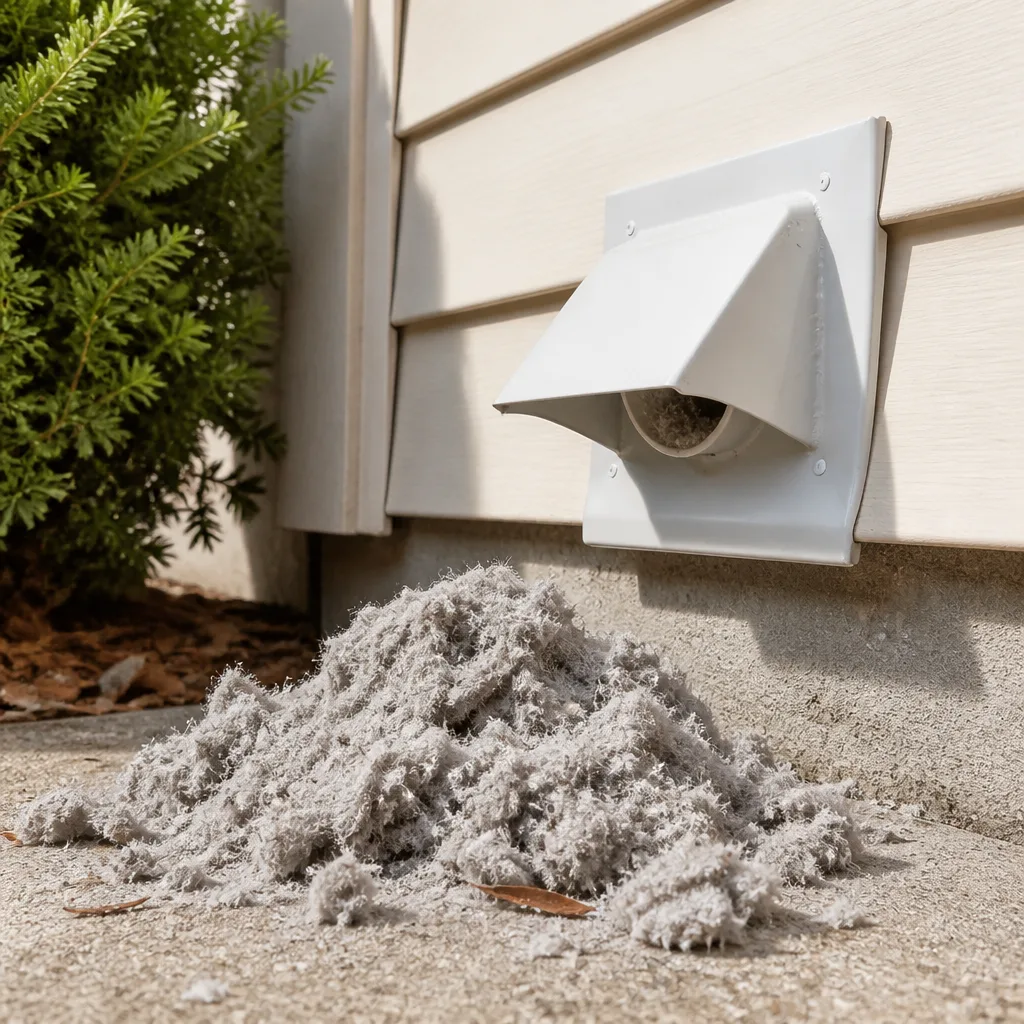 Dryer vent cleaning
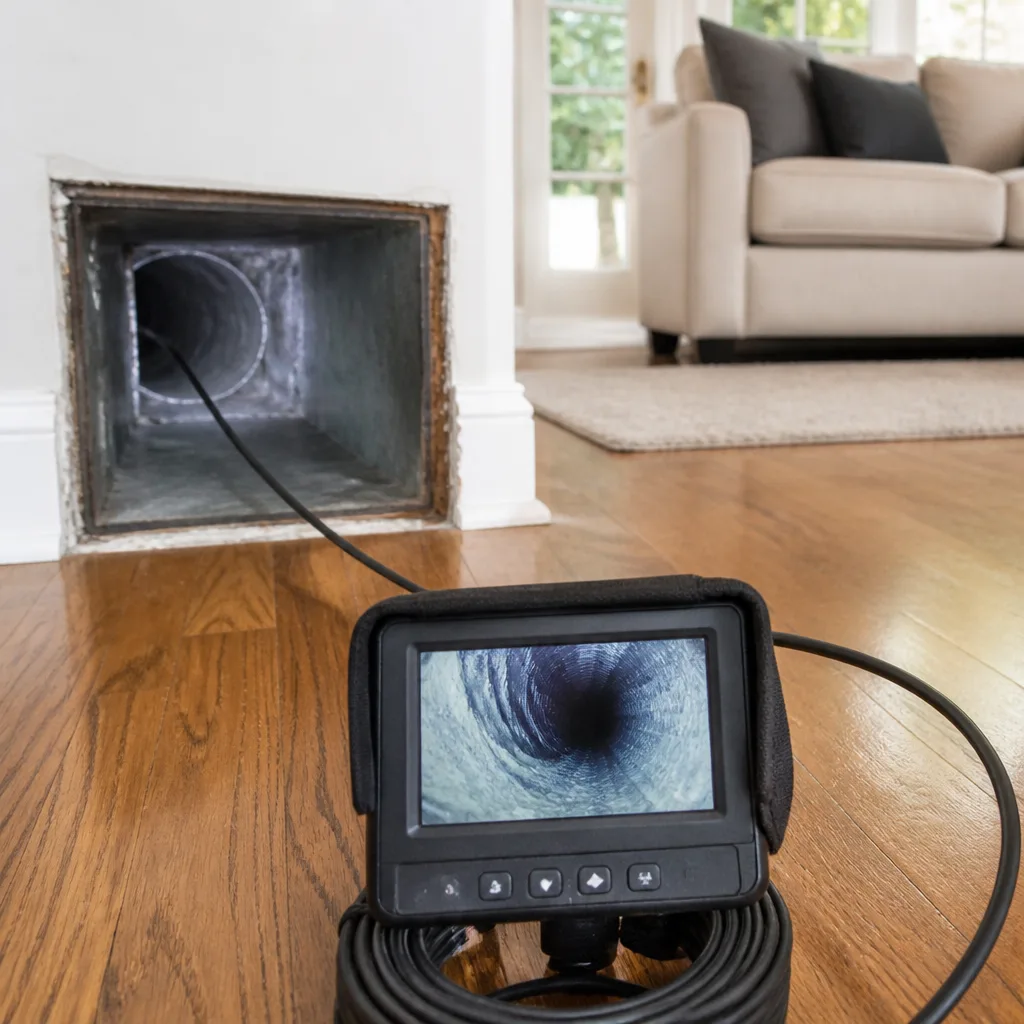 Camera inspection
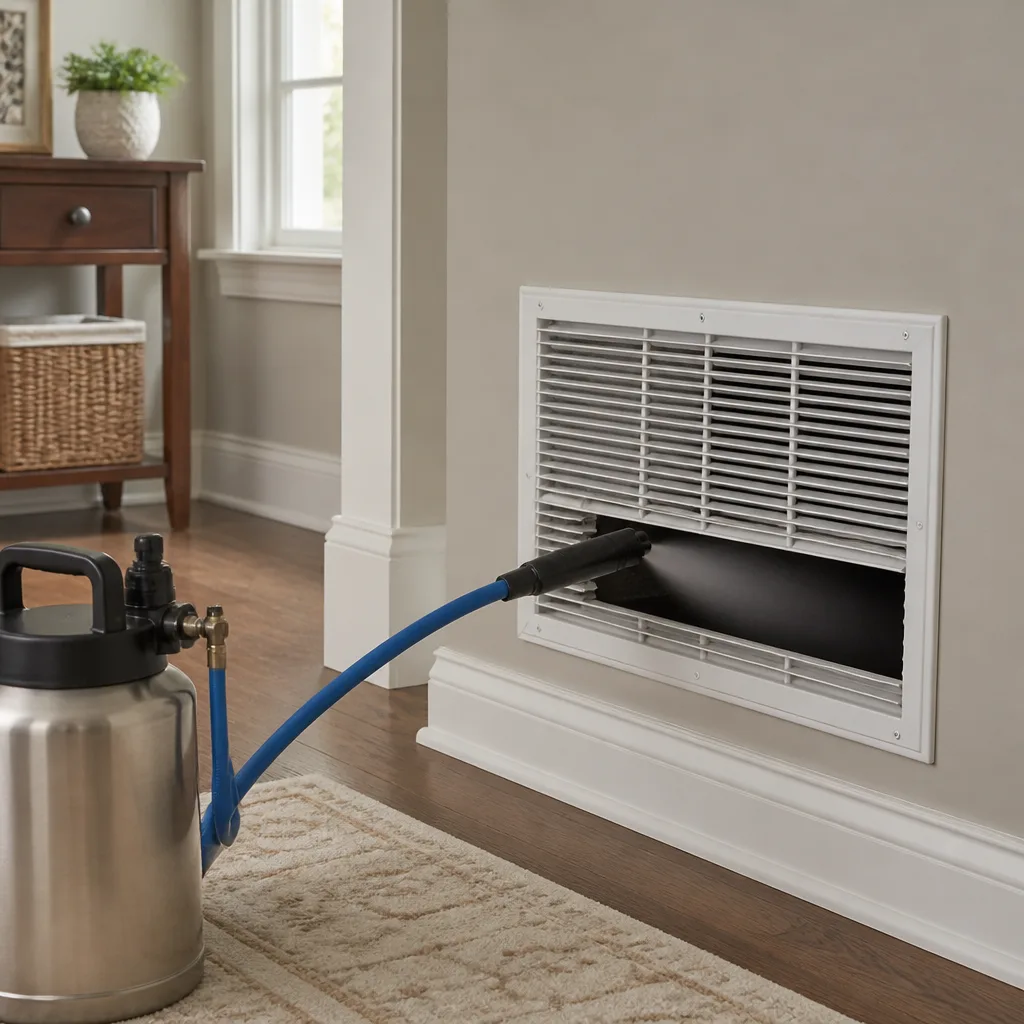 Sanitizing & deodorizing
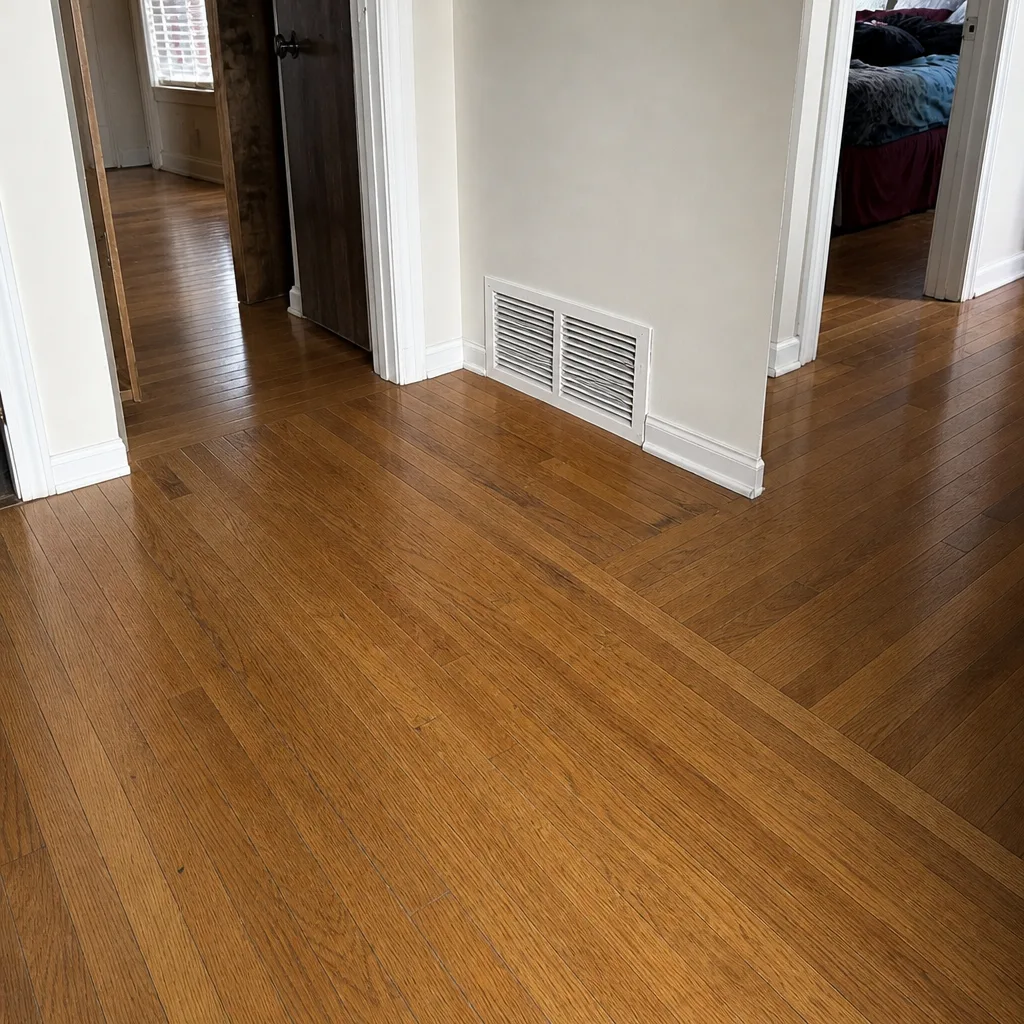
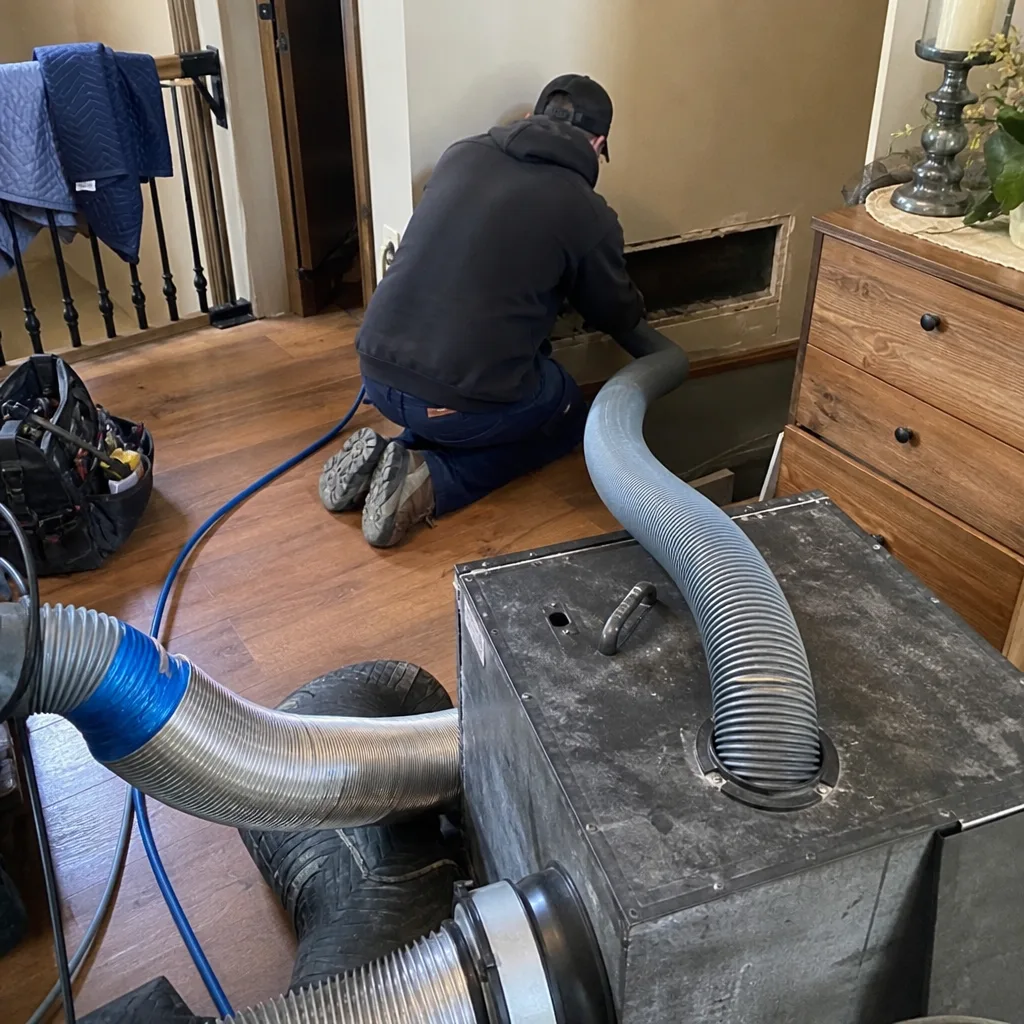
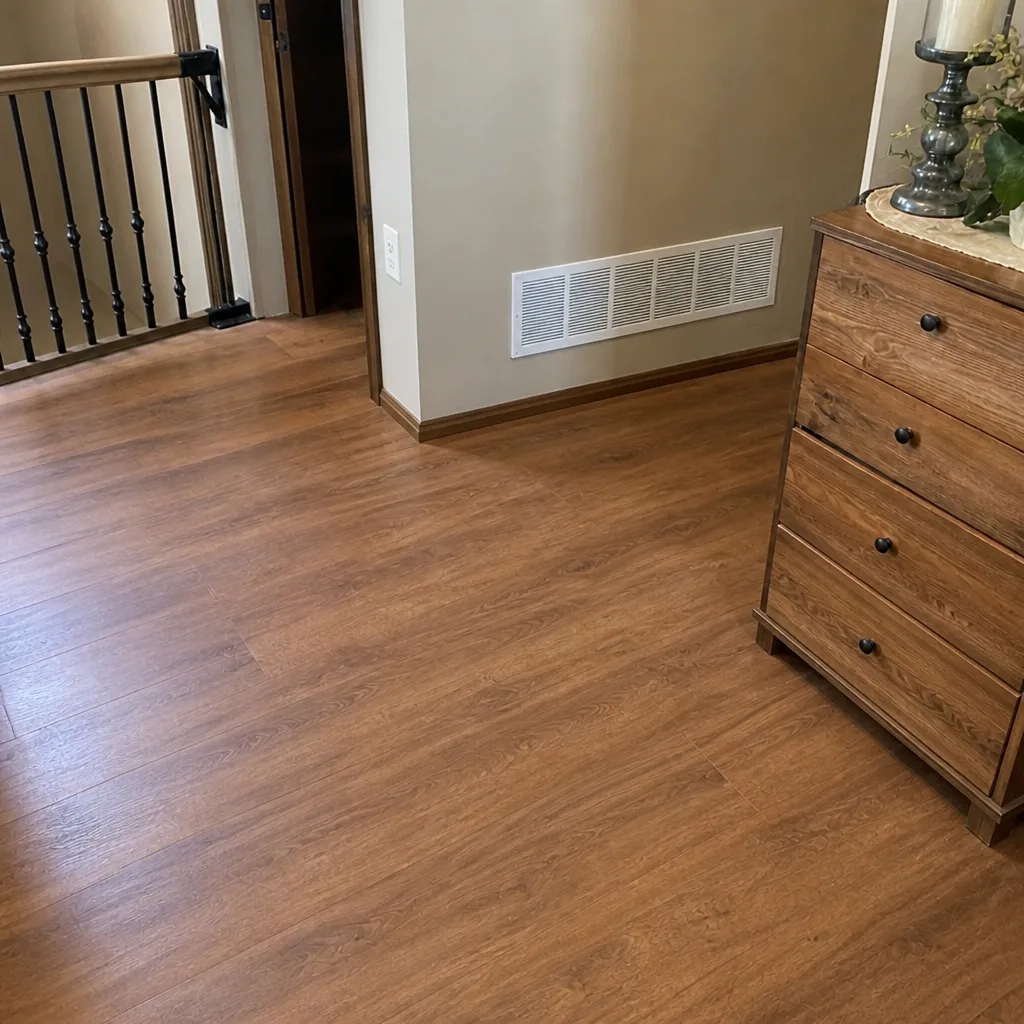
Whole-system duct and dryer vent check with before-and-after photos - you see exactly what came out of your vents
That "$99 whole-house special" is a bait ad - the real number appears once they are in your hallway, or the "clean" is a shop-vac at the register. We photograph the inside of your ducts before and after instead.
DIY vs Professional Air Duct Cleaning: The Aurora Homeowner’s Decision Guide
A rented duct cleaning kit can pull loose dust out of the last foot or so of your ductwork. A professional truck-mount system creates negative pressure across the entire duct run at once, so debris that settled years ago in a branch line behind a bedroom wall actually moves. Those aren’t the same job, and the gap between them is where most Aurora homeowners get confused. DIY duct cleaning isn’t reckless and it isn’t pointless. It solves a smaller problem than professional cleaning solves, and knowing which problem you actually have is the whole decision. This guide walks through what each approach physically does, when doing it yourself makes sense in an Aurora house, when it can make things worse, and how to compare the real costs.
Quick Answer
DIY duct cleaning is worth doing only when your system is newer, was professionally cleaned recently, and shows light dust with no moisture history. Professional cleaning is the right call when you see visible debris, mold, pest evidence, musty odors, or a recent renovation, because consumer equipment can’t generate the negative pressure needed to clear a whole duct run and can push contaminants deeper. In an Aurora home with forced-air heat running five or six months a year, the difference matters more than it does in a milder climate.
Styles & brands we work with
- Whole-home duct cleaning
- Dryer vent cleaning
- Camera inspection
- Sanitizing & deodorizing
Table of Contents
- What DIY Duct Cleaning Actually Does (and Doesn’t Do)
- When DIY Is Genuinely Enough in an Aurora Home
- When DIY Makes the Problem Worse
- The Real Cost Comparison: Time, Equipment, and Missed Problems
- What You Can Safely Do Between Professional Visits
- How to Read a Duct Cleaning Quote in Aurora
- Duct Damage You Can’t See From the Register
- Common Mistakes to Avoid
What DIY Duct Cleaning Actually Does (and Doesn’t Do)
Consumer duct cleaning tools fall into two categories: a shop vac with a long hose, and a rented kit with a spinning brush on a flexible rod. Both work by suction at a single point and mechanical agitation at the end of a reach. The reach is the limit. A typical consumer hose gets you a few feet into a straight run before it loses push, and it can’t turn a 90-degree elbow with any force behind it. Suction at the register is also fighting physics: every other register in the house is open, so the vacuum is pulling air from the whole system rather than concentrating on the branch you’re working.
Professional equipment is built around the opposite principle. A truck-mount or portable negative-pressure unit connects to the main trunk, seals the system, and pulls the entire duct network into a vacuum at once. While that pressure is running, a technician works each branch with a pneumatic whip or rotary brush on a long flexible shaft, breaking debris loose so the pressure carries it back to the collection unit. Rotobrush and Nikro systems are purpose-built for exactly this, which is why they show up in commercial and restoration work rather than hardware store shelves.
Three practical consequences follow, and they explain almost every DIY-versus-professional disagreement:
- Reach: consumer tools clear the register boot and a short run. Professional tools clear the full branch, including the sections behind finished walls.
- Pressure: a shop vac moves a few dozen cubic feet per minute locally. A whole-system negative-pressure setup moves the entire duct volume toward one collection point.
- Access: professionals cut and reseal access ports where needed. A homeowner typically works only through the register grille, which leaves most of the system untouched.
In our experience around Aurora, the confusion usually isn’t about effort. It’s about assuming that because a register looks clean after a shop vac pass, the duct behind it is clean too. It usually isn’t. If you want a fuller picture of what full-system air duct cleaning actually involves, that’s the place to start.
When DIY Is Genuinely Enough in an Aurora Home
There are real situations where a homeowner with a shop vac and a Saturday morning is doing the right thing. DIY duct maintenance is a legitimate option under a fairly specific set of conditions. If most of these describe your house, you don’t need to call anyone yet.
- The system is newer. Ductwork installed in the last decade or so, especially in newer Aurora subdivisions, is often sealed, smooth-lined, and hasn’t had time to accumulate much.
- It was professionally cleaned recently. If a full cleaning happened within the last three to five years and the house hasn’t changed much, light register-side dust is normal and manageable.
- There’s no moisture history. No flooded basement, no humidifier failure, no condensation staining at the registers, no musty smell in the return.
- You haven’t renovated. Drywall dust from a kitchen or bathroom remodel behaves like fine flour and settles deep. If you’ve had recent construction, this condition doesn’t apply.
- Dust is light and uniform. A faint even film at the registers is normal house dust. Clumps, dark patches, or grit that looks like it came from somewhere specific are not.
- Nobody in the house has symptoms that track with the HVAC. If allergies or respiratory complaints get worse when the furnace runs, that’s a signal to look deeper, not to vacuum harder.
Aurora homes built in the last fifteen to twenty years often fall into the “newer system, light dust” category, and for those, an honest answer is that a professional cleaning now would be more preventive than necessary. Cleaning the register grilles, changing filters on schedule, and keeping an eye on the return is reasonable maintenance for a while. If you’re on the fence, a technician can look and tell you honestly whether you need anything. That’s what a free estimate is for.
When DIY Makes the Problem Worse
Here’s the part that rarely gets said clearly: DIY duct cleaning isn’t just less effective in some situations. In a handful of specific situations it can actually work against you. Not because homeowners are careless, but because the physics doesn’t care about good intentions.
Disturbing biological growth
If there’s any sign of moisture damage or microbial growth inside the ductwork, agitation is the wrong tool. A spinning brush breaks a colony apart and spreads spores into the air stream feeding every room. Professional handling means containing the debris at the source and pulling it out under negative pressure. If you see dark staining, fuzzy growth, or smell a persistent musty odor at a register, stop and call. This is a job for someone with the right containment equipment, not a shop vac.
Pushing settled debris deeper
Loose debris that’s settled in a low section of duct or at the base of a vertical run doesn’t want to come back up a consumer hose. Suction at the register often fails to lift it, and a brush can break it into smaller particles that migrate farther into the system. Once lightweight debris has been pushed into a branch that’s harder to reach, professional cleaning takes longer and costs more than it would have before.
Masking structural problems
This is the biggest risk. Visible debris at a register sometimes means the duct itself is compromised. Loose joints, disconnected sections, crushed flex, or a duct that’s no longer sealed all produce symptoms that look like ordinary dust. If you vacuum what’s visible and call it done, the underlying problem keeps running: air leaking into a wall cavity, conditioned air lost to a crawlspace, dust pulled in from wherever the breach is. Cleaning without inspecting misses this entirely, and that’s the gap that Air Duct Repair exists to close.
Working near heat sources or in awkward mechanical spaces
Consumer kits usually get used in tight basements and mechanical closets with the furnace running. If the pilot light, the flue, or a gas appliance connection is anywhere near your work, stop. Ductwork itself is straightforward, but the equipment around it isn’t, and contaminated debris drawn past a heat exchanger is a different problem. If you’re not sure what you’re looking at in the mechanical room, don’t guess.
If any of these describe your situation, the honest next step is a look, not a bigger vacuum. Call (888) 364-6081. We answer 24/7. Free estimates, and a technician will tell you what’s actually going on before you spend anything.
The Real Cost Comparison: Time, Equipment, and Missed Problems
Comparing DIY to professional duct cleaning on sticker price alone is where most Aurora homeowners go wrong. A rented kit and an afternoon look cheap next to a professional quote, but the comparison hides three costs: the time you spend, the equipment you’re trusting, and the problems that don’t get found.
Time
A thorough DIY pass on a typical Aurora house with ten to fifteen registers runs most of a day once you factor in setup, moving furniture, wrestling the hose into tight spaces, and cleanup. And the work you did is aimed at the last few feet of each branch, not the whole run. That’s time spent on a partial result.
Equipment
Rented kits vary dramatically in quality. Consumer-grade shop vacs that get repurposed for duct work weren’t designed to handle fine drywall dust or to hold a seal at the register boot. If your rental has a worn hose connection or a failing gasket, you’re pulling ambient air rather than duct air and the cleaning effect drops sharply. Professional equipment has the right seals, the right suction curve, and the right tools for the geometry of a real duct system.
Missed problems
Professional cleaning includes inspection. A technician with experience is going to notice a disconnected joint, a crushed flex run, water staining, or a return that’s drawing from an unintended space. Those findings often explain exactly why the house feels dusty, and they don’t show up on a DIY pass. Fixing a damaged duct also improves the effectiveness of every future cleaning, which makes the next professional visit cheaper over the long run.
What professional pricing looks like
Professional duct cleaning in Aurora is priced per system, not per vent. Every job gets a written estimate before any work starts. What you should look for in that estimate is that the price reflects the whole system, not a teaser number that grows once a technician is in the house. Our flat price per system is set in writing before we start, and you get before-and-after photos of your own ductwork afterward. No surprises.
What You Can Safely Do Between Professional Visits
There’s a useful middle ground between “call a pro” and “do nothing.” Several routine tasks genuinely extend the time between professional cleanings in an Aurora home, and they’re all safe to do yourself.
- Clean the register grilles. Pull the grilles and wash them with warm soapy water. This alone removes dust that would otherwise fall back into the duct every time the blower starts.
- Look, don’t reach. With the grille off and a flashlight, look into the register boot and the first stretch of duct. You’re checking for moisture staining, visible debris, pest evidence, or obvious separation.
- Replace filters on the schedule the filter specifies. A clogged filter strains the system and sends more dust into the ducts. Fiberglass throwaway filters need changing more often than pleated ones; follow the manufacturer’s interval and check the filter monthly in heating season.
- Check the return grille. The return pulls air into the system from living space, and it catches a lot. Cleaning the return grille and its pre-filter (if it has one) makes a difference to the air that actually gets into the ducts.
- Keep the mechanical room dry. Moisture in the space around the air handler is the number one way hidden problems start. Address any dampness or condensation promptly rather than letting it sit through the summer.
- Note what changes. If dust returns faster than it used to, or a register suddenly smells different, write it down and mention it at your next service call. That history tells a technician a lot.
If you have a whole-home air quality system like a Honeywell or Aprilaire unit tied into the ductwork, leave its internal components alone. Those units are accessible to a service technician and not something to open and poke at yourself. Filter replacement for those systems follows the manufacturer’s schedule, and the duct cleaning around them is where the real work happens.
How to Read a Duct Cleaning Quote in Aurora
Aurora has a lot of duct cleaning providers, and the range in quality between them is wide. The most important thing you can do as a homeowner is read the quote carefully, because the low number on a coupon and the real number on the invoice usually aren’t the same.
What a legitimate quote includes
- A per-system price, not a per-vent price. Per-vent pricing invites the classic upsell: a low teaser for the first few vents, then a much larger bill once the crew is inside.
- A written estimate before any work begins. If the price isn’t in writing, it isn’t a price.
- Inspection as part of the visit. A serious provider looks before cleaning and tells you what they find. That’s how duct damage gets caught.
- Before-and-after photos of your ductwork. You should be able to see what was actually inside your ducts and what came out of them. Photos are the difference between a real job and a claim.
- Evidence of proper equipment. Ask what machine they run. A truck-mount or portable negative-pressure system with rotary and pneumatic tools is the baseline for a real cleaning. A shop vac with a long hose is not.
What should raise a flag
- A price that’s dramatically lower than every other quote, with equipment you can’t identify.
- No written estimate.
- No photos.
- Vent-by-vent pricing that grows after work starts.
- Any promise to also handle mold remediation, HVAC repair, or appliance work. Those are separate trades, and a contractor claiming all of them is usually going to subcontract half of it or skip it.
Aurora Duct Cleaning is a specialist, not a generalist. Our scope is air duct cleaning, dryer vent cleaning, and Air Duct Repair, and we stay in that lane on purpose. That’s where the equipment and the training pay off.
Duct Damage You Can’t See From the Register
This is the part of the decision most homeowners haven’t been told: cleaning without inspecting leaves you blind to the reasons your house is dusty in the first place. Ductwork is mechanical. It runs through unconditioned spaces, it’s taped at the joints, and in Aurora it sees real temperature swings for months every year.
Common damage a technician finds during a professional visit includes:
- Disconnected joints. Taped flex connections come loose with age, and a disconnected joint in a crawlspace or attic pulls outside air into the system.
- Crushed or kinked flex runs. Flex duct that’s been stepped on, folded during a previous install, or forced around a corner restricts airflow to a specific room.
- Failing duct sealant at the plenum. The connection between the air handler and the trunk line sees the most turbulent air in the system and takes the most wear.
- Water staining near a coil or humidifier. Once a duct has held moisture, “cleaning” that section without addressing the source doesn’t solve anything.
If you’ve been cleaning your registers yourself for years and the dust keeps coming back, that’s usually not a sign you need to vacuum harder. It’s a sign something in the ductwork is pulling in dust from a space it isn’t supposed to reach. That’s what Air Duct Repair is for, and finding it is part of what happens when the system is actually inspected. A free estimate isn’t just a price; it’s a look at the system with someone who knows what they’re seeing.
Common Mistakes to Avoid
- Vacuuming without sealing the system. A shop vac running at one register while the rest of the house is open pulls air from every other room, so the branch you’re working gets a fraction of the suction. It looks clean and mostly isn’t.
- Using a spinning brush on a duct with any moisture history. Aurora basements and crawlspaces see enough humidity in summer that moisture in a duct is common. Brushing disturbed growth spreads spores; call instead.
- Working around a running furnace or boiler. Consumer duct kits in a mechanical room with an active gas appliance is a risk that has nothing to do with the duct cleaning itself. If you don’t know what’s connected where, leave it alone.
- Assuming clean registers mean clean ducts. The register boot is the visible inch of a system that runs hundreds of feet. Visible cleanliness tells you almost nothing about the branch behind it.
- Hiring on coupon price alone. The bait-and-switch reputation in this trade comes from coupon bait and per-vent pricing. A quote with no per-vent line items, no upselling once the technician is inside, and a written estimate up front is what you actually want.
- Skipping the return side. Return ducts move just as much air as supply ducts and often collect more dust. A homeowner cleaning only supply registers is doing half the work.
- Not looking at the dryer vent while you’re thinking about duct cleaning. Lint-clogged dryer vents are a documented fire risk, and it’s the kind of maintenance that gets forgotten precisely because it doesn’t complain. If the duct cleaning gets you thinking about the rest of the system, that’s a good time to look.
See the difference
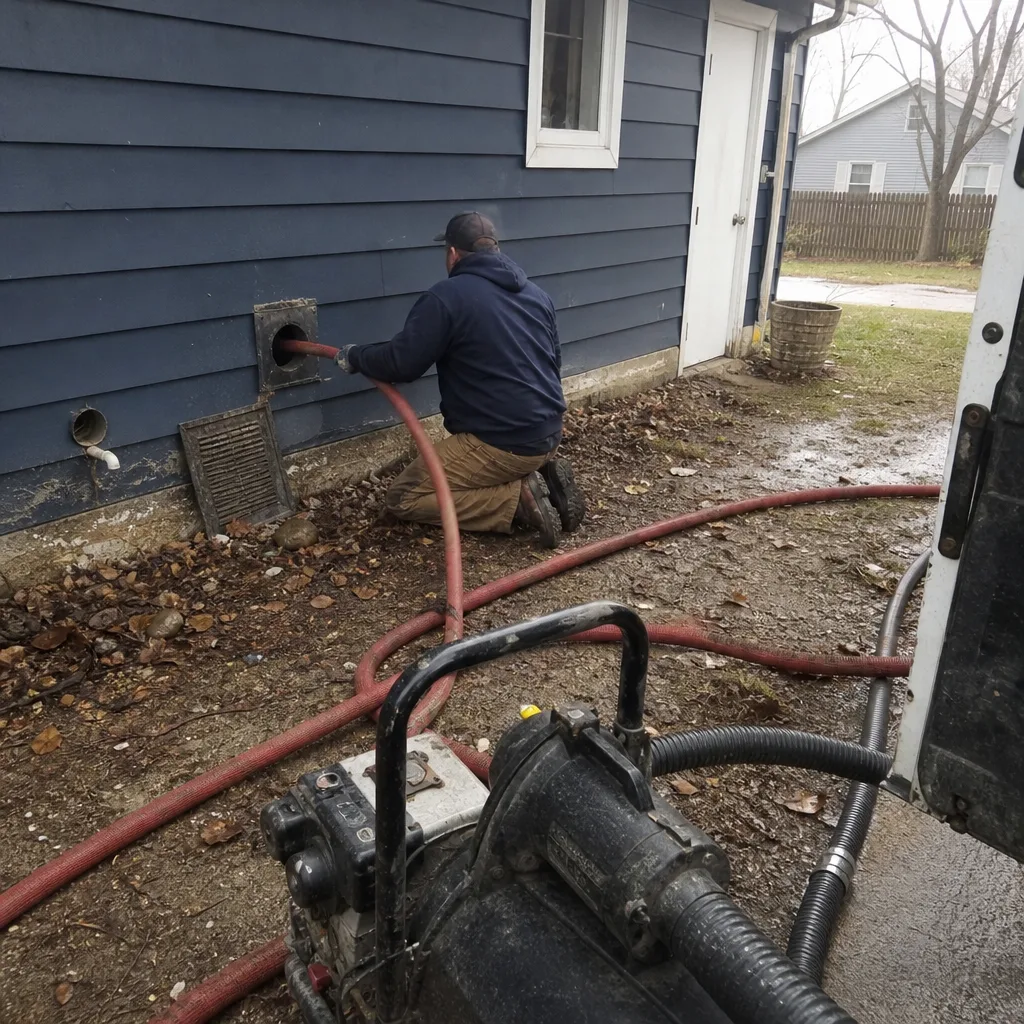 Before
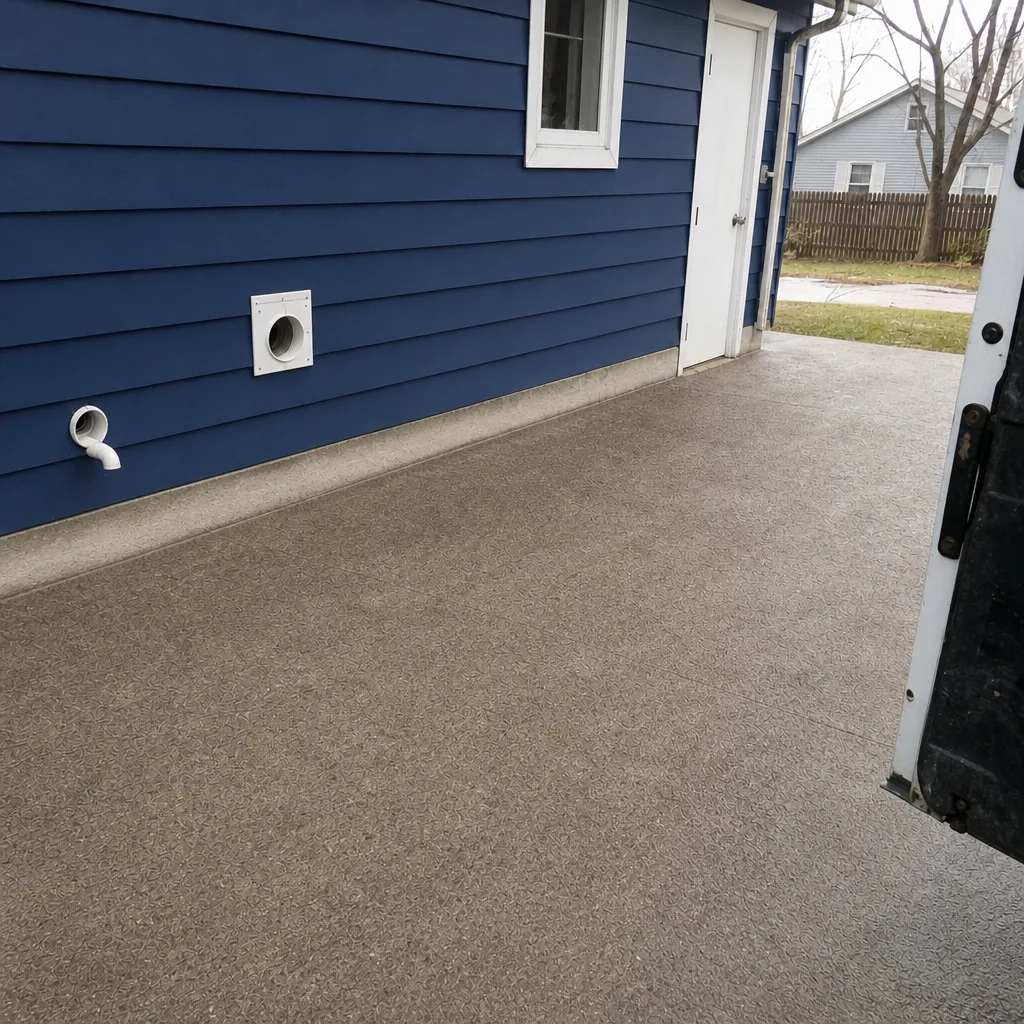 After
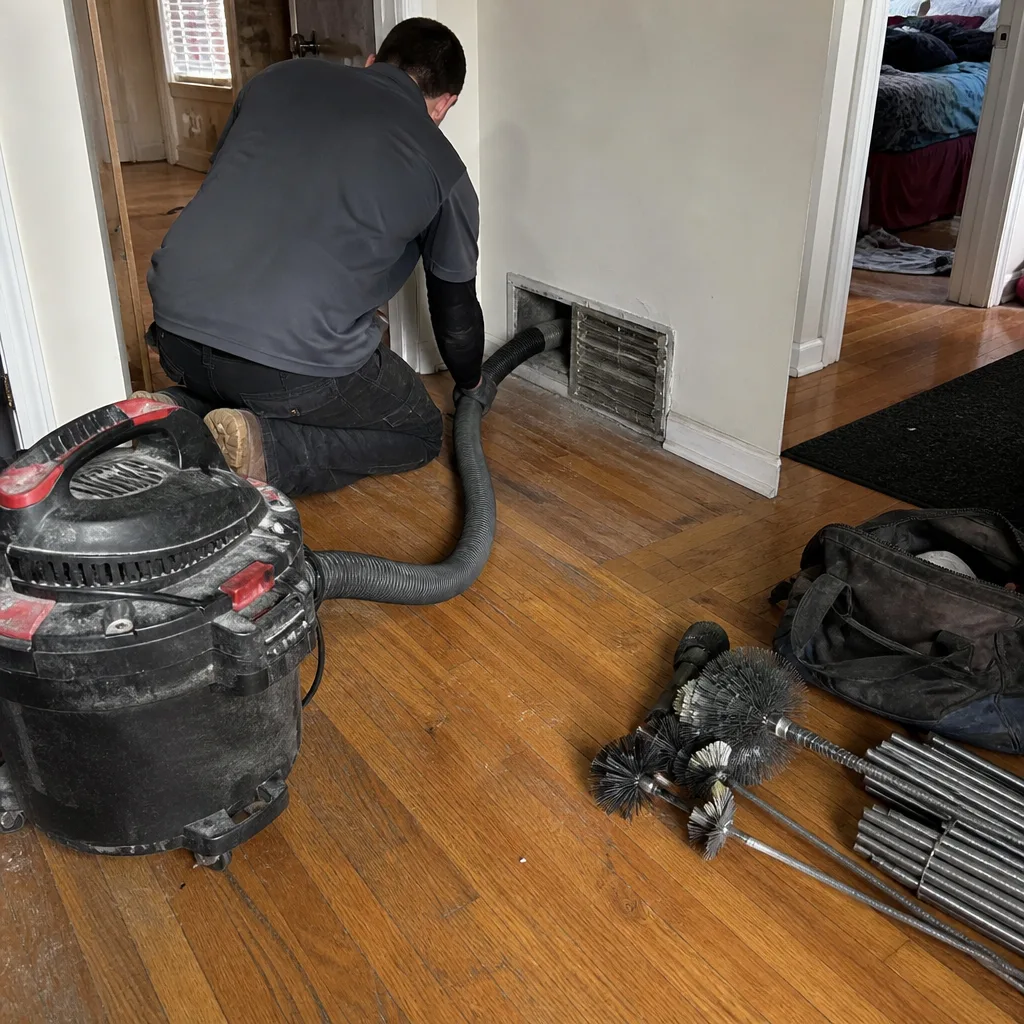 Before
 After
 Before
 After
When to Call a Professional
Some situations call for a professional visit without hesitation. You’ve seen visible debris or material that isn’t dust at a register. You smell musty air anywhere in the house when the blower runs. You’ve had a renovation, a flooding event, or pest activity in the last year. Someone in the home has respiratory symptoms that track with HVAC cycles. The system has never been cleaned and the house is more than ten or fifteen years old. Or you’ve done a DIY pass and the dust keeps coming back, which usually points to a problem cleaning won’t solve. In any of these cases, a professional look is worth more than another Saturday with a rental kit. Aurora Duct Cleaning offers free estimates in Aurora. Call (888) 364-6081 to book one. We answer 24/7, and dispatch runs 7am to 7pm, Sunday through Friday.
Frequently Asked Questions
Yes, in a narrow set of cases: a newer system, a recent professional cleaning, light uniform dust, and no moisture history. In those conditions, cleaning register grilles and the return is reasonable maintenance. For anything else, the reach and suction of consumer equipment leave most of the system untouched, and the DIY effort doesn’t solve the actual problem. Call (888) 364-6081 for a free estimate if you want an honest opinion about whether you need a professional visit.
You can make things worse, yes, though usually not in a dramatic way. A brush can dislodge debris deeper into the system, and agitating a duct with any moisture history can spread contamination into the airstream. The bigger risk is missing a real problem. A disconnected joint or a crushed flex run that doesn’t get found keeps pulling in dust regardless of how many times you vacuum the registers.
Professional duct cleaning in Aurora is priced per system, not per vent, and every job gets a written estimate before any work starts. The final number depends on system size, the number of branch runs, and whether repairs are needed. We don’t quote a per-vent price or a teaser figure, because a real flat price per system is the only honest way to price it. Call (888) 364-6081 and we’ll give you a written estimate for your actual house. Free, no obligation.
Usually because the cheap quote isn’t for the same job. Coupon prices typically cover a per-vent count that grows once a crew is on site, or come with consumer-grade equipment and no inspection. A quote that reflects a full-system negative-pressure cleaning with proper tools, an inspection, and before-and-after photos is going to cost more than a coupon, because it’s actually a different service. Read the quote for per-vent pricing, and ask what equipment they use.
Every three to five years is a reasonable interval for a typical Aurora home, though that varies based on pets, occupancy, renovations, and filter discipline. Newer homes with well-sealed ductwork often go longer; older homes, or homes with a renovation or moisture event, may need it sooner. An inspection will tell you more than a schedule can. Call (888) 364-6081 if you’re not sure where your house falls.
Before-and-after photos of your own ductwork. A real duct cleaning leaves evidence you can look at, and the photos should show the inside of the ducts at the start and again after cleaning. If a provider doesn’t offer photos, that’s a signal the work may not have been as thorough as the invoice suggests. Call (888) 364-6081 and we’ll walk you through what a professional visit includes.
The Bottom Line
DIY duct cleaning isn’t the enemy and it isn’t a substitute. It’s a light-maintenance tool that works on a narrow band of situations, and on a small but important set of conditions it can make things harder. Before you spend a Saturday with a rented kit, decide which of those situations you’re in: newer system with light dust, or older system with symptoms you can’t explain. Register cleaning, filter discipline, and visual inspection at the return are safe to do yourself year-round. Anything involving visible growth, musty odor, recent renovation, or dust that keeps coming back belongs to a professional who can inspect the system and fix what they find in the same visit. And if you want an honest read on your own house, that’s free.
Aurora Duct Cleaning uses professional-grade equipment from Rotobrush and Nikro, along with Abatement Technologies filtration for high-contamination environments and familiarity with Honeywell and Aprilaire air quality systems. Our technicians have up to 10 years of experience. We service Aurora and we’d be glad to look at your system. Call (888) 364-6081 for a free estimate. We answer 24/7. Fast dispatch from 7am to 7pm, Sunday through Friday. Learn more about Aurora Duct Cleaning and the services we offer.
Written by the team at Aurora Duct Cleaning.